Goal 4: Teaching Fluency

Goal 4: Teaching Fluency

Goal 4

In this section of the book, it discusses fluency. It is an important section because it is critical to know the parts of the goal reading fluency; phrasing, expression/intonation, emphasis, automaticity, and pace. All of these pieces fit together to equal adequate fluency when reading. So in this chapter you will get strategies that help you with ensuring that each of those pieces are in tact to equate a fluent reader.

My Top 3 Strategies:

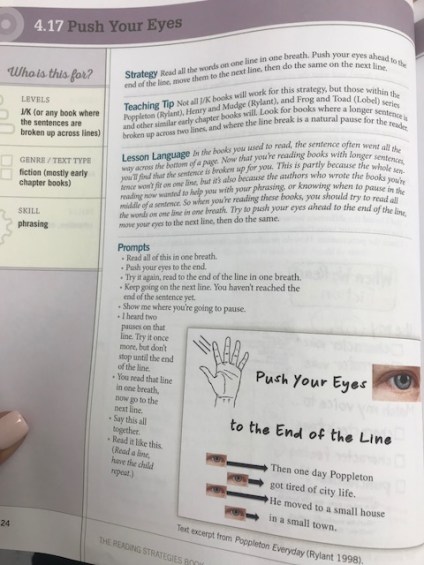
Goal 4.17: Push Your Eyes

Push your eys

I love this strategy because as a child, I struggle with pushing my eyes “ahead of the line.” There I was a choppy reader. Laboring over each and every word. This stratedy teaches the kids to read in phrases rather than words. It teaches kiddos to move their eyes (during the pause) ahead of the line then read. So they are reading in one breath. It will take some practice, but it will help to build a more fluent reader.

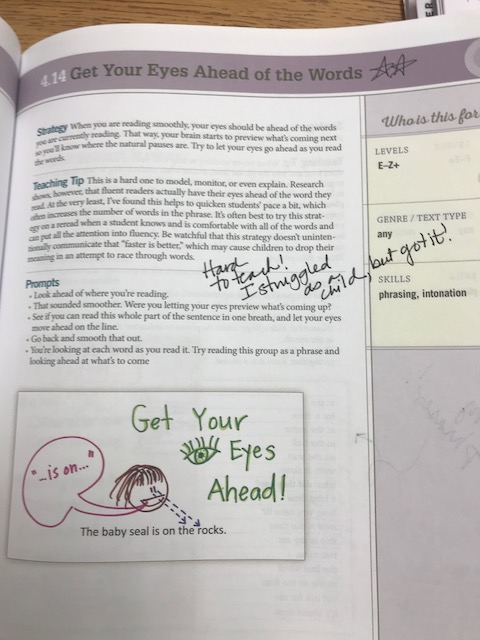
Goal 4.14: Get Your Eyes Ahead of the Words

Get your eyes ahead of the word

This strategy is critical because it allows the brain to “preview what’s coming next.” It allows the students to increase their reading pace. This isn’t to intend that “reading faster” equals a fluent reader, but it is intended to help friends grab phrases in order to read smoother at a steady pace.

Goal 4.18: Partners Can Be Fluency Teachers

Partners can be fluency teachers

I love, love, love this strategy and I have used this sooo much in my previous classrooms. It is creating Fluency Partners/Coaches! The partners help by listening in and being a help to each other. The partners gives feedback, compliments, and prompts their partner to go back and reread as needed. Modeling. Modeling. Modeling would be extremely critical to ensure that partners are being a positive voice while working with each other.

I suggest you check out some of these strategies and try them in your classrooms.Signed

Goal 3: Supporting Printwork

Hey guys! So I am a day late and a dollar short with posting. I’ve been at the beach with my family. We had a great time and I promised myself no school work, just family time and it was awesome. Here is a beach pic!


Anywho, enough about my fun-filled beach trip. As I rode up and back, I read Goals 3 & 4 of the reading strategy book. So here we go! 😊


Goal 3: Supporting Print Work 

In this section of the book, I was truly into it because I feel like I as a primary grade teacher that I spend a ton of time teaching and re-teaching strategies while in small group, whole group and during individual conferences. So while reading this chapter, it gave me a sense of agreement in teaching the strategies. It also gave me a number of strategies to enhance the teaching of reading. I love learning new strategies and things to implement in small group work. So I was super pumped!

My Top 3 strategies: 

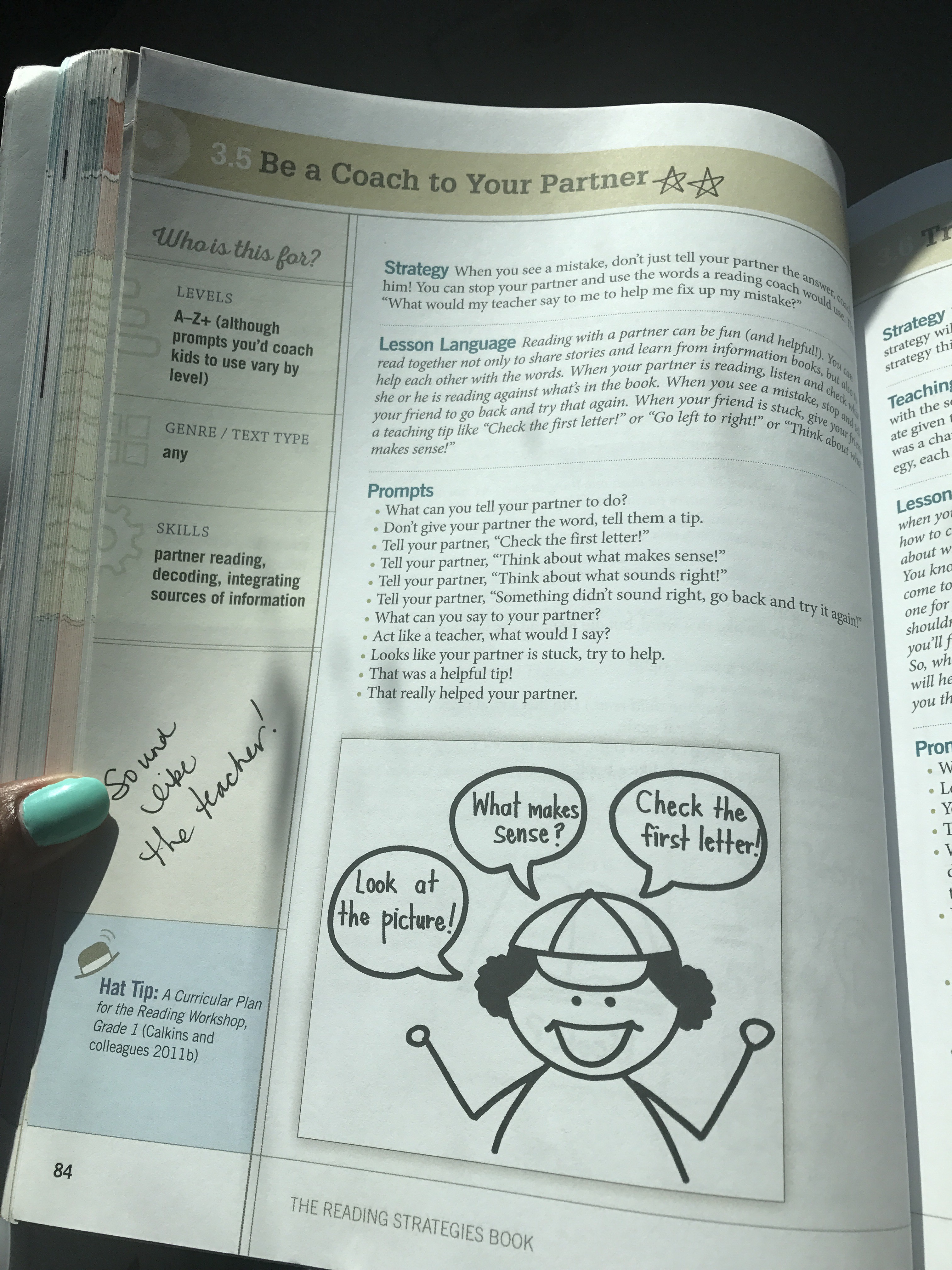
Goal 3.5: Be a Coach to Your Partner

I love this strategy because in this strategy it allows students to coach and remind their partners about the reading strategies to use while reading. This is great especially if you use the Daily 5, “Read to Someone” station. It allows the partner to know exactly what to say and the reader to have support (like a teacher) while reading. 

Goal 3:10: Juggle All Three Balls

This goal is one that kiddos struggle with especially when they are first learning how to read. Reading can be challenging and it’s a lot to think about while you read. They have to think about what makes sense, think about how a book sounds and think about what looks right. It’s a lot to take in and do at one time. In my opinion, this strategy would be great to use in small group or individual conferences to get the biggest bang for your buck.


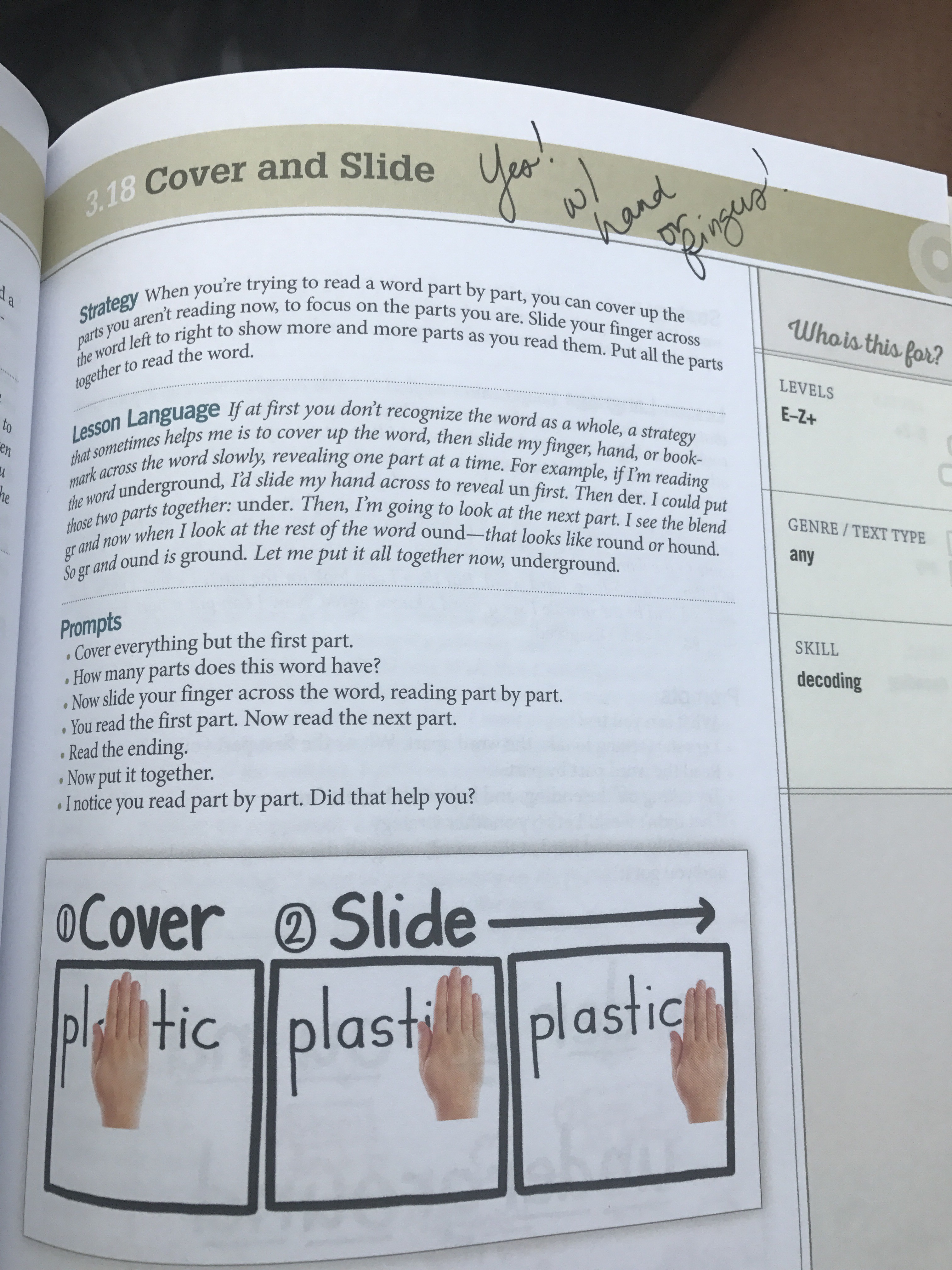
Goal 3:18: Cover and Slide

This strategy is a great strategy for decoding words. The students should already be immersed in a word study program that is used with fidelity. By using a word study program, the students will be able to effectively slide their fingers to group letters together to sound out blends, diphthongs and vowel patterns. Using this tool to model during whole group and small group will aide students in the decoding process in order to gain meaning from the text.


Goal #3: My fave quote


All the strategies in this section are all really helpful when teaching reading to not only younger grades, but older kiddos who also struggle with decoding words and reading for meaning. This is a win!

Signed

Goal 2: Teaching Reading Engagement (focus, stamina and building a reading life) 


How many times have you had a wonderful guided reading session and then send the kids for Read-to-Self time then you look up and notice them not reading? They aren’t playing around, just not reading. Fake reading. Serravallo states it this way, “without engagement, we’ve got nothing.” Well isn’t that the truth?!?!

On page 45, she states, “An engaged reader is often one who is “motivated to read, strategic in their approaches to comprehending what they read, knowledgeable in their construction of meaning from text, and socially interactive while reading.”

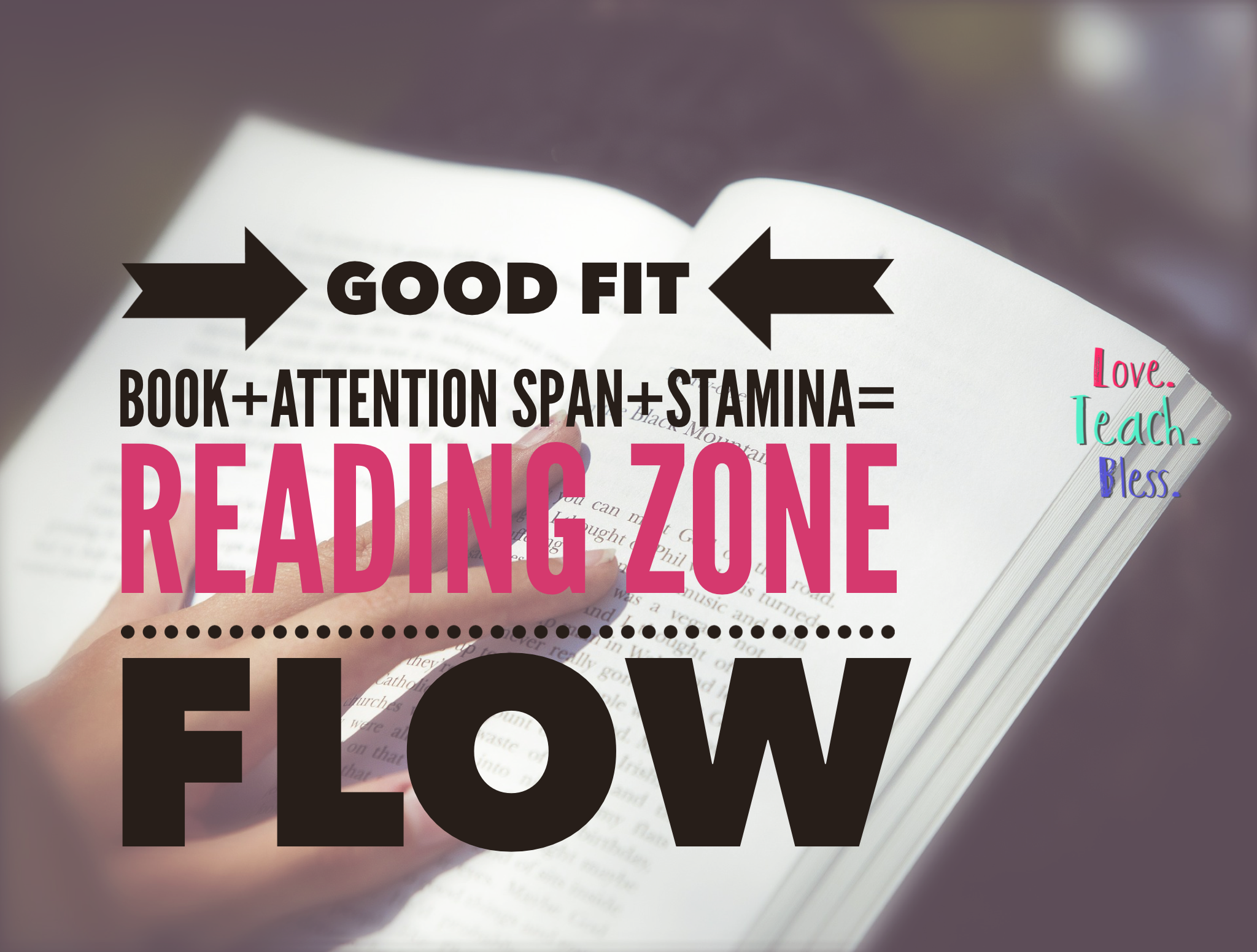
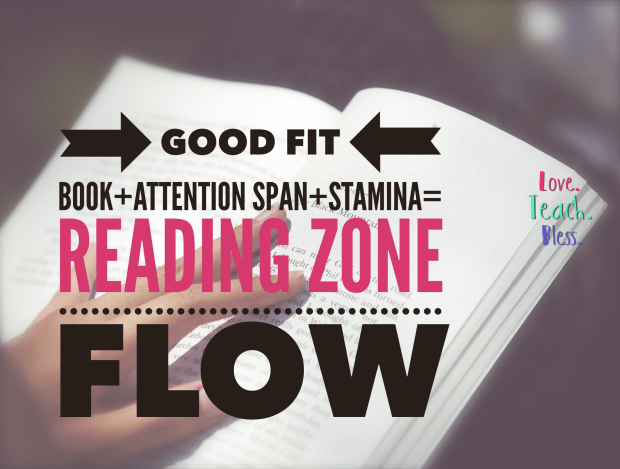
Wow! We need to build that Reading engagement and Goal #2 helps us with that! It helps teachers of reading with strategies to teach readers to enter into the “Reading zone” or flow of reading.

 3 favorite strategies in Goal #2:

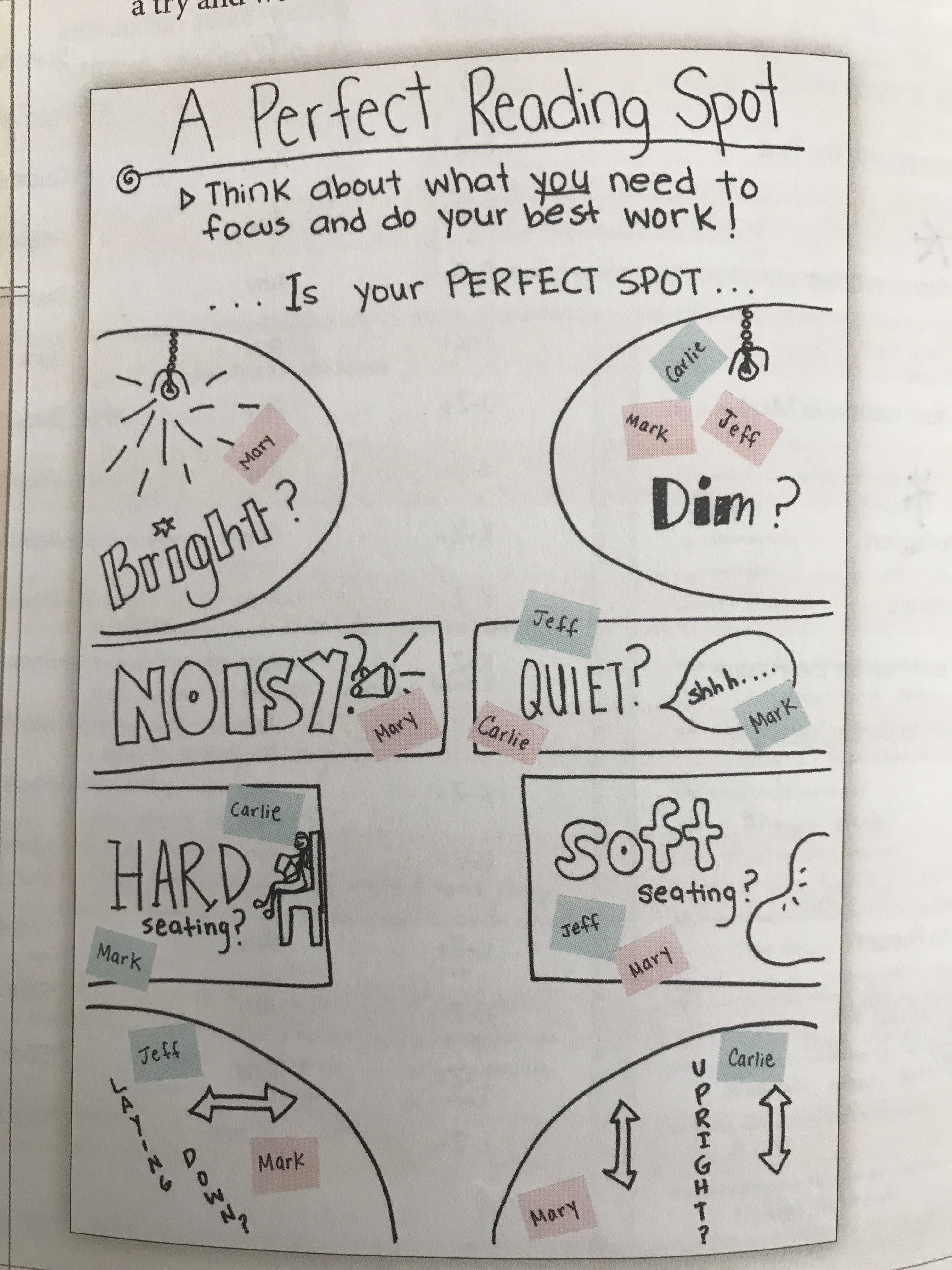
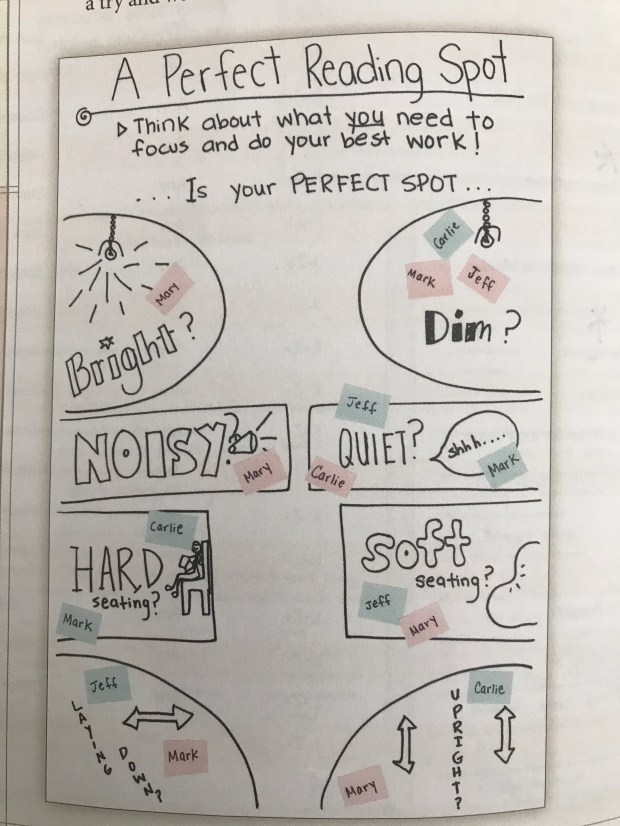
Strategy 2.1 A Perfect Reading Spot

This is one of my favorite strategies in this  section. I feel like it is my favorite strategy because finding a perfect reading spot is essential to maintaining focus during a student’s reading zone time. If a student struggles to pay attention and attend to text, then if that you are in a spot that is distracting to them, they will not be successful at doing their reading zone time. Picking a spot that is perfect for them if essential to them being successful.

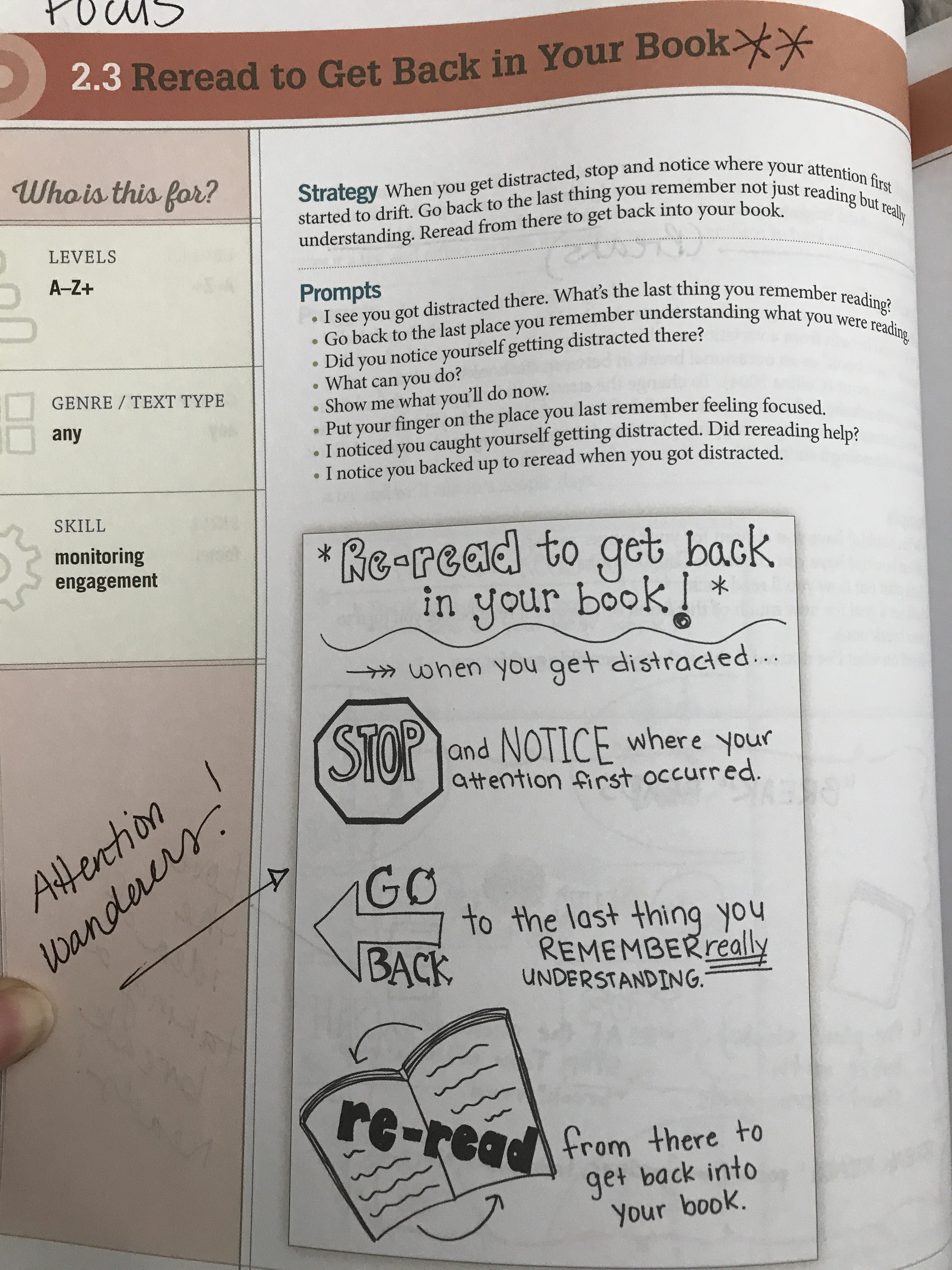
2.3 Reread to Get Back in Your Book

How many times even as an adult do you get distracted while reading? As adults, we know that we have to go back and re-read the sections that we were distracted in order to comprehend the text. But kids possibly won’t do that without being taught. In strategy 2.3, it helps with teaching kids to go back and re-read the part in your book when they get distracted! I remember this happening to me very much as an elementary school student. But instead of going back and rereading the text, I would continue on reading even though I didn’t know what the text was even talking about. I would then not do well if there were comprehension questions that went with the reading passage or book. I believe this is why this strategy was an important one to me. If I had been taught and modeled how to go back and reread to get back in my book, I would’ve been a more successful and focused reader. 

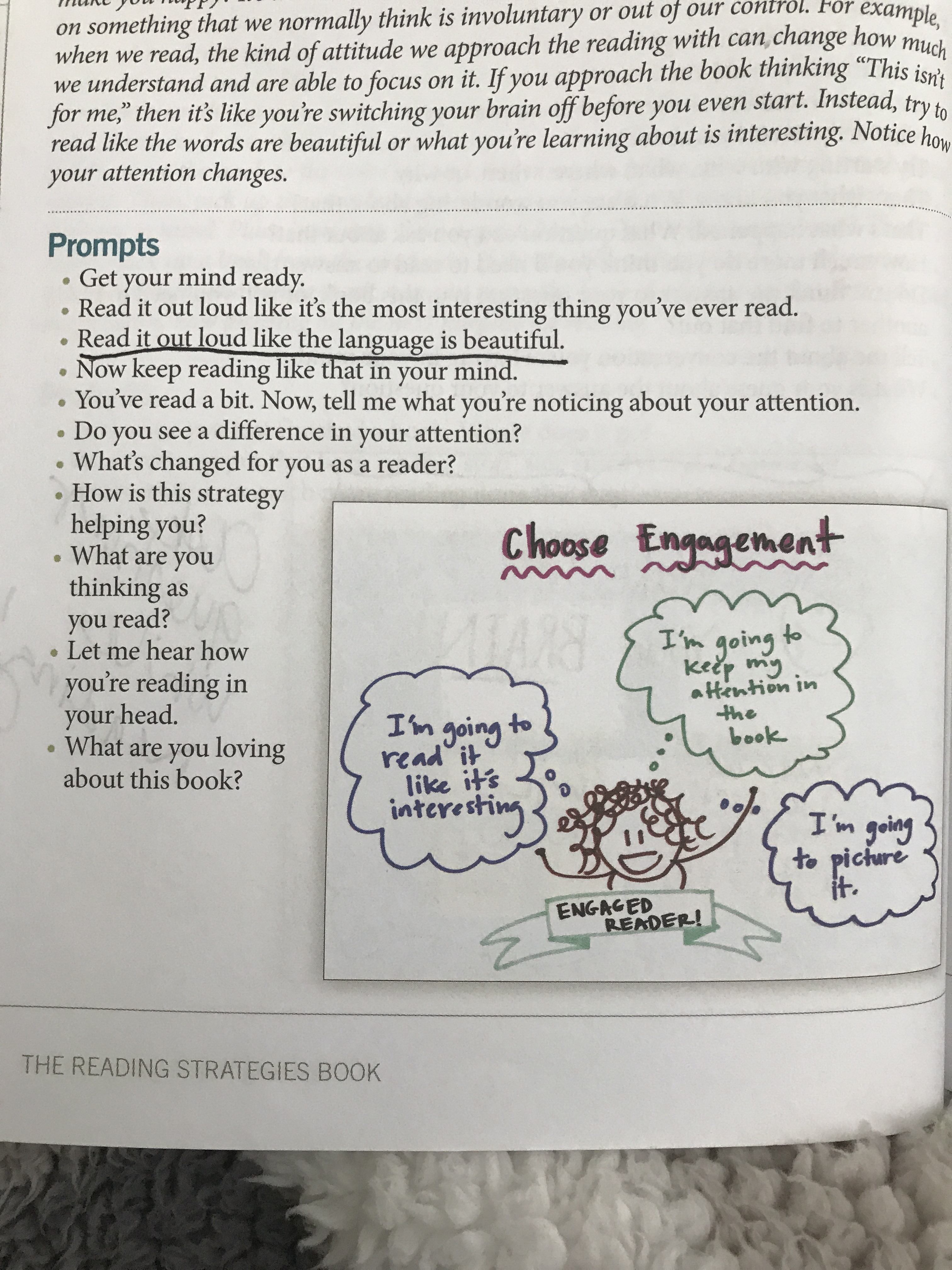
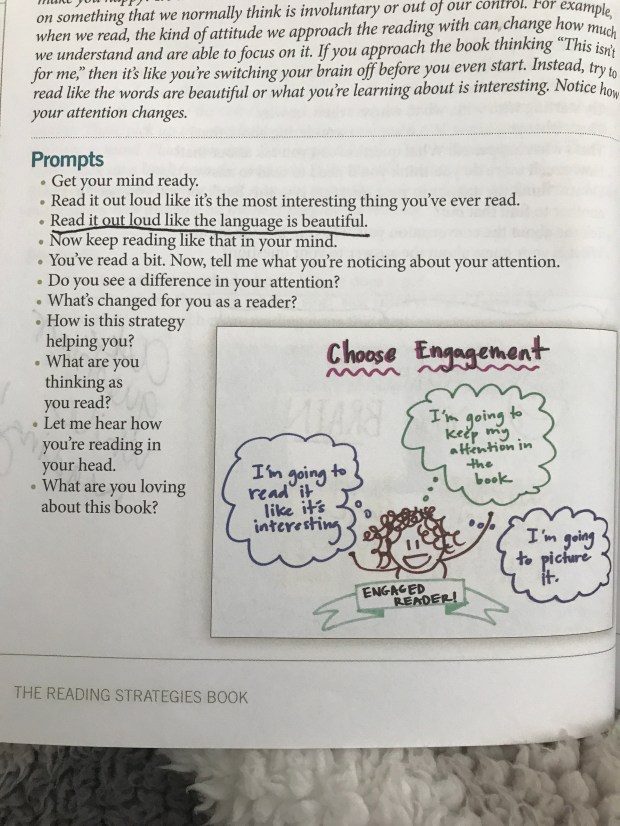
Strategy 2.13 Mind Over Matter

Another strategy that I thought was an important one was strategy 2.13, Mind Over Matter. I don’t only think this is a strategy just for reading time, however, I believe this is a life skill for all subject matters for all grade levels. This strategy discusses being engaged even when you don’t want to be engaged. This made me think back to college and my Environmental Biology coursework. Did I love learning about Environmental Biology? No. The thought of it made my stomach turn.  It was one of those core classes that I had to take in order to finally be able to study what I cameto college for, Education. But I knew I had to get through it! I knew I had to put in my mind that Environmental Biology was something that I wanted to learn about and I made myself feel it was engaging. Were there times that I had to go back and reread because I had lost my attention? Yes. Were there times that I had to retell and go over the facts that I had learned and chunk  out long sections that I thought were boring?  Yes. But it was something that I had to do. I had to get my mind ready for reading. This strategy is an important life skill to teach students. There won’t always be reading that the student’s are interested in. There won’t always be reading that describes the student’s reading identity. And that’s ok 👌🏽. What I found in that Environmental Biology course, was the more that I changed my attitude about my reading and the more that I read, it became more interesting to me. The more I learned. This life skill in reading will help students learn too.

These were my top 3 strategies! On to reading Goal 3 & 4! Happy reading!