Goal 5: Supporting Comprehension in Fiction: Understanding Plot and Setting

Goal 5Teachers are always checking a student’s comprehension either when we are assessing their reading or performing reading conferences. But in this book it discusses how checking for understanding of plot and setting the checking process has a few parts: understanding what’s most important, summarizing (which students often struggle with), visualizing the setting, and synthesizing cause/effect. Some strategies (many strategies) that stuck out to me to help students through the understanding of fiction text as it relates to plot and setting were the following:

My Top 3 Strategies

5.2 Title Power

This strategy helps the students to keep the title in their mind as they read and always think back to the title. It is important to discuss with the students the title’s importance as well as the importance of headings and sub-headings.

5.3 Summarizing What’s Most Essential

This particular strategy helps the students to determine the MOST IMPORTANT events in the story. It helps the students to connect those events to the problem in the story. This strategy also helps students to state events in sequential orders. (Often students struggle with sequencing)

5.23 Map It

I looooooved this strategy because this helps with building visualization for the setting! this strategy helps students to draw a map of the details the author gives you about each place that occurs within the fiction story. This strategy helps the students to dive deeper into the “why” of the setting and its significance.

 

Goal 4: Teaching Fluency

Goal 4: Teaching Fluency

Goal 4

In this section of the book, it discusses fluency. It is an important section because it is critical to know the parts of the goal reading fluency; phrasing, expression/intonation, emphasis, automaticity, and pace. All of these pieces fit together to equal adequate fluency when reading. So in this chapter you will get strategies that help you with ensuring that each of those pieces are in tact to equate a fluent reader.

My Top 3 Strategies:

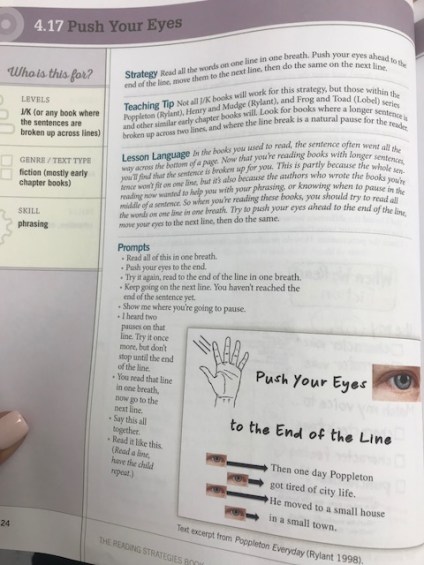
Goal 4.17: Push Your Eyes

Push your eys

I love this strategy because as a child, I struggle with pushing my eyes “ahead of the line.” There I was a choppy reader. Laboring over each and every word. This stratedy teaches the kids to read in phrases rather than words. It teaches kiddos to move their eyes (during the pause) ahead of the line then read. So they are reading in one breath. It will take some practice, but it will help to build a more fluent reader.

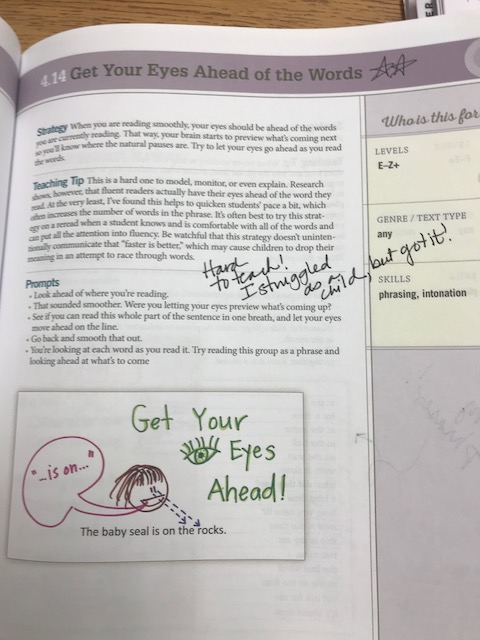
Goal 4.14: Get Your Eyes Ahead of the Words

Get your eyes ahead of the word

This strategy is critical because it allows the brain to “preview what’s coming next.” It allows the students to increase their reading pace. This isn’t to intend that “reading faster” equals a fluent reader, but it is intended to help friends grab phrases in order to read smoother at a steady pace.

Goal 4.18: Partners Can Be Fluency Teachers

Partners can be fluency teachers

I love, love, love this strategy and I have used this sooo much in my previous classrooms. It is creating Fluency Partners/Coaches! The partners help by listening in and being a help to each other. The partners gives feedback, compliments, and prompts their partner to go back and reread as needed. Modeling. Modeling. Modeling would be extremely critical to ensure that partners are being a positive voice while working with each other.

I suggest you check out some of these strategies and try them in your classrooms.Signed

Goal 3: Supporting Printwork

Hey guys! So I am a day late and a dollar short with posting. I’ve been at the beach with my family. We had a great time and I promised myself no school work, just family time and it was awesome. Here is a beach pic!


Anywho, enough about my fun-filled beach trip. As I rode up and back, I read Goals 3 & 4 of the reading strategy book. So here we go! 😊


Goal 3: Supporting Print Work 

In this section of the book, I was truly into it because I feel like I as a primary grade teacher that I spend a ton of time teaching and re-teaching strategies while in small group, whole group and during individual conferences. So while reading this chapter, it gave me a sense of agreement in teaching the strategies. It also gave me a number of strategies to enhance the teaching of reading. I love learning new strategies and things to implement in small group work. So I was super pumped!

My Top 3 strategies: 

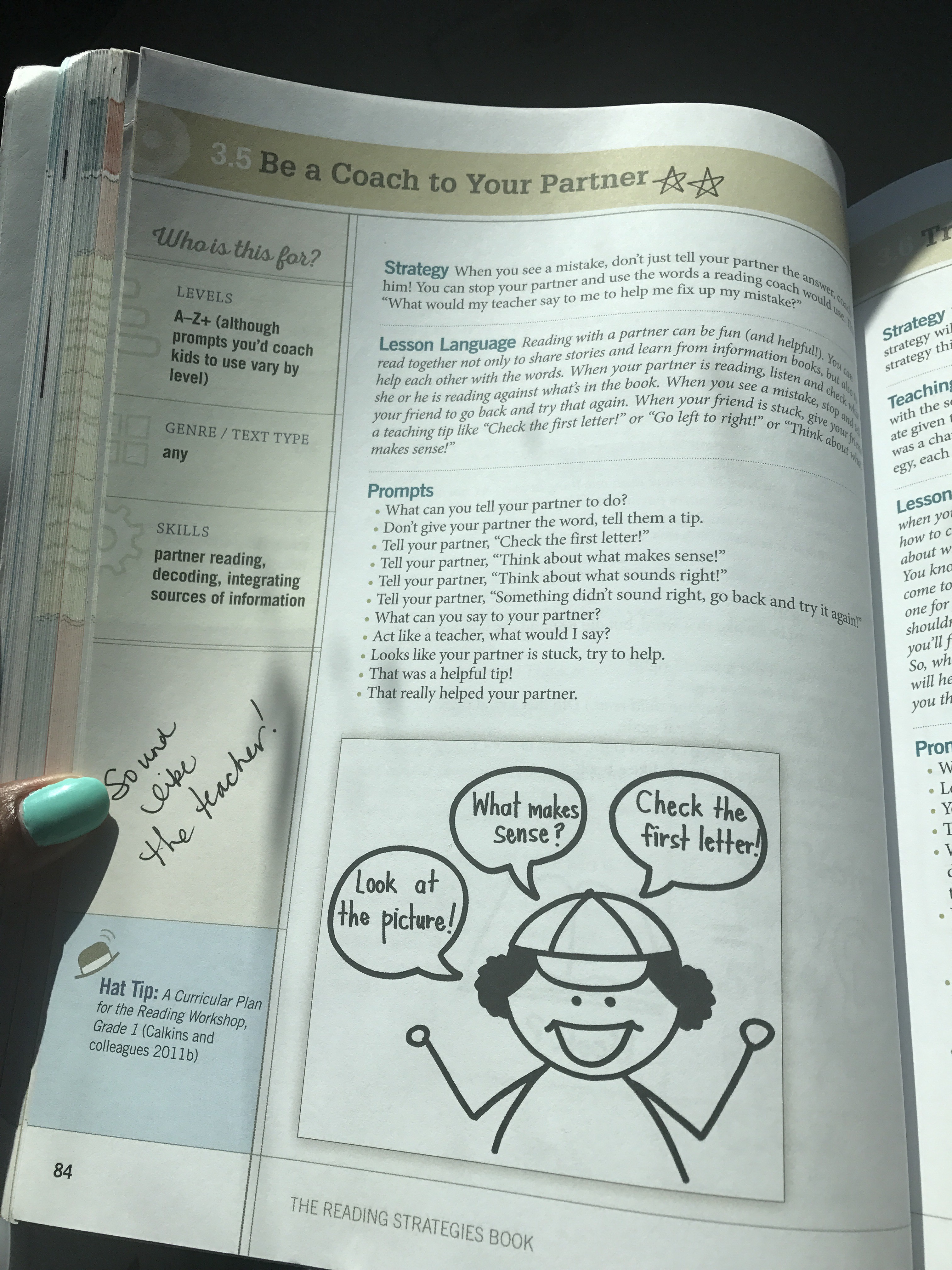
Goal 3.5: Be a Coach to Your Partner

I love this strategy because in this strategy it allows students to coach and remind their partners about the reading strategies to use while reading. This is great especially if you use the Daily 5, “Read to Someone” station. It allows the partner to know exactly what to say and the reader to have support (like a teacher) while reading. 

Goal 3:10: Juggle All Three Balls

This goal is one that kiddos struggle with especially when they are first learning how to read. Reading can be challenging and it’s a lot to think about while you read. They have to think about what makes sense, think about how a book sounds and think about what looks right. It’s a lot to take in and do at one time. In my opinion, this strategy would be great to use in small group or individual conferences to get the biggest bang for your buck.


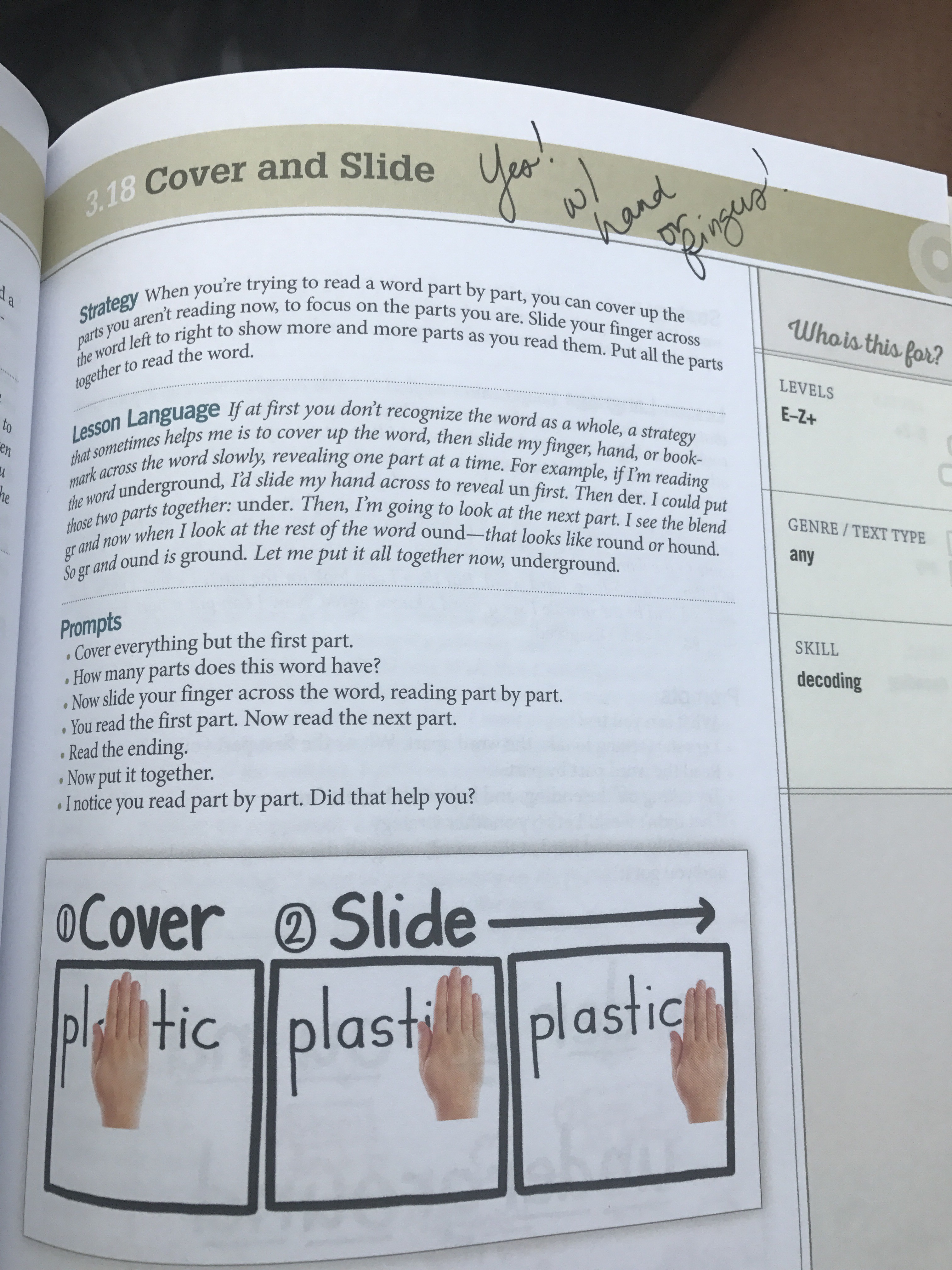
Goal 3:18: Cover and Slide

This strategy is a great strategy for decoding words. The students should already be immersed in a word study program that is used with fidelity. By using a word study program, the students will be able to effectively slide their fingers to group letters together to sound out blends, diphthongs and vowel patterns. Using this tool to model during whole group and small group will aide students in the decoding process in order to gain meaning from the text.


Goal #3: My fave quote


All the strategies in this section are all really helpful when teaching reading to not only younger grades, but older kiddos who also struggle with decoding words and reading for meaning. This is a win!

Signed