The Wonders of LEGO®️ Education BricQ Motion

Who doesn’t remember growing up, building with LEGO Bricks and loving it?

So simple, yet so powerful. And nothing beats the creativity of building with LEGO. Not only does it allow students to create, it helps them to learn to collaborate, discuss, play and have fun while doing it.

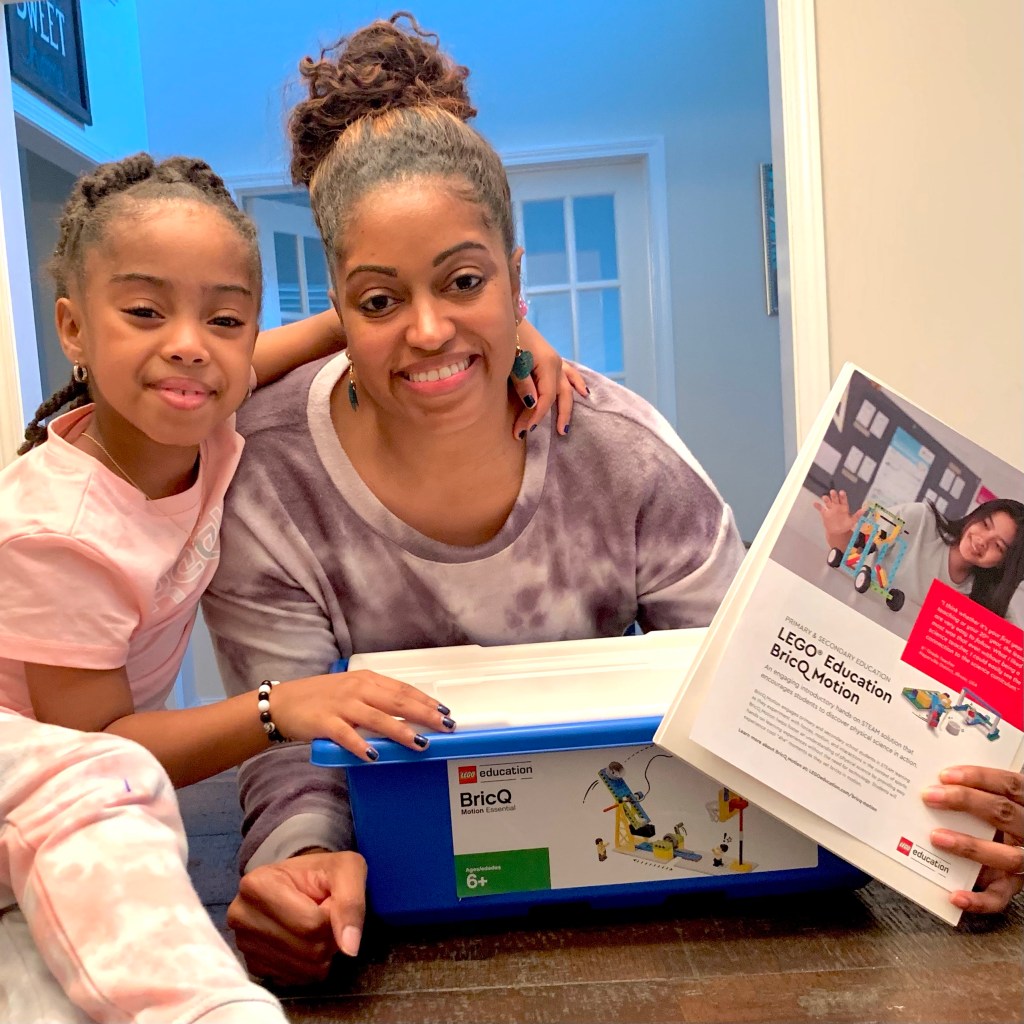
LEGO Education creates educational products using LEGO bricks to teach a variety of STEAM (Science, Technology, Engineering, Arts and Math) concepts. LEGO® Education BricQ Motion is an amazing addition to their product line! It enables teachers and students to feel more confident in STEAM learning by removing digital barriers and teaching physical science through fun and engaging sports-themed lessons for grades K-8. The removal of the barriers is key in opening the world of STEAM to more students! Sometimes educators can be overwhelmed by the T in STEAM—-the technology/digital side. But BricQ Motion has removed that portion to focus on physical science.

BricQ Motion has an amazing lesson plan set, interactive worksheets and teacher/student videos that can be used along with students as they create and experiment with force, motion, and interaction! It’s so amazing to watch students creating while the teacher is the facilitator and guider.

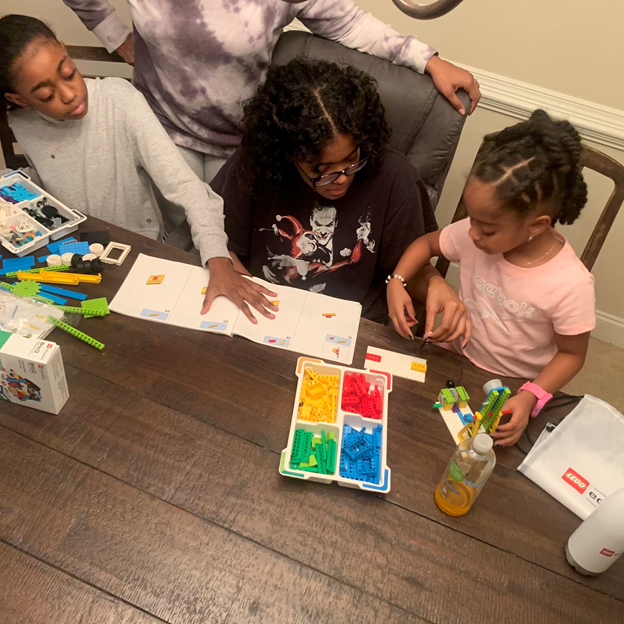
During Holiday Break, three of my children ages 7, 15 and 13, worked together to build the BricQ MotionEssential basketball Free Throw model! They loved it. They collaborated, discussed, took turns and worked together to build. I was the thoughtful facilitator. It was great to see! As they were creating, it made me think of the variety of ways the LEGO®️ Education BricQ Motion could be used in the classroom! It is a wonderful asset to any classroom whether you are digital, hybrid or brick and mortar.

I know some educators may be thinking “how can this be done in a digital setting?” Students could have individual sets given to them and they can begin to build and create at home. While doing this they can write down the problems they encountered, why and how they think BricQ Motion creates motion, what could be added to the BricQ Motion model to make it different, or draw their BricQ Motion model in a comic strip as they create a story to go along with it to up the ante! In a live digital session, students could discuss their answers to these questions and share their comic strips—together.

Depending on your hybrid model, students could be grouped to build together, play and collaborate on the BricQ Motion assignment. Using the interactive worksheets, the students could answer the question sets, discuss and create stories to go along with their build. The students could also work to create the BricQ Motion build individually and still collaborate in discussion afterwards. The possibilities are endless with this LEGO®️ Education solution.

Play is powerful for students. I would be remiss if I didn’t discuss the ultimate power of purposeful play with the LEGO®️ Education BricQ Motion Kit. “Play connects us to the world and to each other and offers limitless possibilities.” (Mraz, Porcelli, Tyler) Play allows students to question, think critically, create and wonder. It allows students to build. That is what BricQ Motion does for students who interact with it: create, interact, think critically, collaborate and wonder. All elements that build our muscles in the brain. What is more powerful than that? You can read more about LEGO®️ Education BricQ Motion here: LEGOeducation.com/BricQ-motion
Play helps to build our brain muscles.

WE Teachers is what Educators Need!

This post is sponsored by WE Teachers, made possible by Walgreens. All opinions are my own.

The answer to the statement above is FALSE.

The beginning of the year in the field of education has always been stressful. However, with the Covid-19 pandemic crisis among us and years of a pandemic called systemic racism, stress for everyone is at an all-time high—especially educators. This time of year could not have been better for We Are Teachers and WE Teachers to partner together to create pertinent resources and training for teachers to aid them on trauma-led classrooms during this time. There is no time like right now that this is needed.

Let me tell you, educators, a little bit about the awesomeness of WE teachers! WE teachers is free program that is made possible by Walgreens. It is created for teachers all across America. It provides resources and training to support teachers in addressing critical social issues that students are facing today. At this time in education, this is exactly what educators need. WE teachers makes sure that every teacher in the U.S. has access to all the tools and training they need to support their students.

WE teachers has seven themes in which professional resources are available for teacher access. The themes are the introduction, mental well-being, bullying, a pandemic-informed community, poverty, diversity & inclusion and youth violence. In each of these themes, there are videos and modules that aid in the teacher training. With that being said, the theme that I chose to dive into was the mental well-being of students and educators. I chose this one to spend time learning because I feel that I can become more informed in the trauma that students face, but also the trauma that is faced by teachers and their well-being as well.

        In the modules, I gained so much valuable and critical information about student mental health challenges. The module of mental well-being was divided into five sections: Understanding the Issue, Common Mental Health Challenges and Conditions, Mental Well-being in the Classroom, The Importance of Teacher Well-being and References. This first section of this module addresses issues ranging from suicide, depression, self-esteem, body image, ADHD and more. In each of the learning sections, it begins with what was normal activity as it related to the mental health challenge, warning signs to look for and as educators, what we can do in each of the mental health challenges and conditions faced. It moves on to section 3 and discusses mental well-being in the classroom and emphasizes the importance of social-emotional learning and best practices for educators. It also includes lessons on well-being, empathy and mindfulness. These lessons were absolutely amazing and much needed. I even practiced some deep breathing for myself that was included in one of the lessons.

        The last section of the module is about the importance of Teacher Mental Well-being. This last section spoke to my soul. Teacher well-being is so incredibly important. We have to put our names at the top of the list self-care and well-being in order for us to be able to be there our students. We have to have our glasses full to be our full selves. It is important that we take the time to feed into our well-being and practice self-care in order to provide the support needed to help our students during this time. It is just that important.

        Another thing that I love about WE teachers is that they honor and appreciate educators. They have put so much thought and time into this free platform, but also it just shows just how much they want to support educators. They want to also give more to educators with The WE Teachers Award.

The WE Teachers Award recognizes that teachers do so much more than teach. We are mentors, guides, and leaders. This special award recognizes the teachers that go above and beyond their classroom and their community. Teachers can be nominated or apply for an award using the online application. WE Teachers is awarding 1,000 teachers with $500 Walgreens gift cards to be used to support teachers in their classroom! How amazing is that?!?!

        Click on the link to check out all the free WE Teachers modules, WE Schools Live and resources! You will not be disappointed! We need this! It is long overdue.

Connecting with Students & Families while Distance Learning

Place a Call Home

While you are teaching from home, set aside a time to reach out to a couple of your student’s families each day! Make the phone call to check in on the families, talk to your student, and let them know you are still there for them from afar. A phone call goes a long way! Parents and your students remember that phone call.

Send a Postcard or Write a Letter

Send a postcard or letter to your student that shows them that they are still on your mind. Let them know that you are thinking of them and that you can’t wait to see them soon. Students love to get notes from their teachers. It does not matter the age of your students at all. When you send that note, it sticks with them and they cherish it.

Email your Parents and/or your Class

Send an email everyday, yes EVERYDAY to your parents and/or your class depending on the age of your students. This email is important and it let’s them know that learning is still happening and that you are available for them. Send an email telling them good morning! Give them some suggested activities of the day and give them an activity as a family to do together. (i.e. read a book together, play cards, play a board game, family coloring time, draw a picture together, watch a movie together, go outside and toss the ball, etc…)

Send a Video

I know. I know. Not everyone feels comfortable video taping themselves, but a 10 minute video shouldn’t be too hard. You could hold a virtual morning meeting, read aloud a book, do a quick mini-lesson, do a math problem that you know is problematic for your students, show a fun at-home science experiment. The options are endless! The point is that you are connecting with your students and they feel connected to you.

Send Positive Vibes

I’m a quote girl! I love sending quotes to teachers, friends, families, students, just about everyone. Whatever is your thing, send that vibe. If it is a song, a poem, an excerpt from a book, send positive vibes to your students and their families. One thing about sending positive vibes, somehow those vibes also can internally help you, the educator, as well. We need to make sure that we are not only breathing positivity into our students and families, but also into ourselves. It is important during this time for us to take care of ourselves, come together as a community, and do what we can–virtually. It is also pertinent that although we cannot be there with our students physically, that they know we are still there for them.