Goal 2: Teaching Reading Engagement (focus, stamina and building a reading life) 


How many times have you had a wonderful guided reading session and then send the kids for Read-to-Self time then you look up and notice them not reading? They aren’t playing around, just not reading. Fake reading. Serravallo states it this way, “without engagement, we’ve got nothing.” Well isn’t that the truth?!?!

On page 45, she states, “An engaged reader is often one who is “motivated to read, strategic in their approaches to comprehending what they read, knowledgeable in their construction of meaning from text, and socially interactive while reading.”

Wow! We need to build that Reading engagement and Goal #2 helps us with that! It helps teachers of reading with strategies to teach readers to enter into the “Reading zone” or flow of reading.
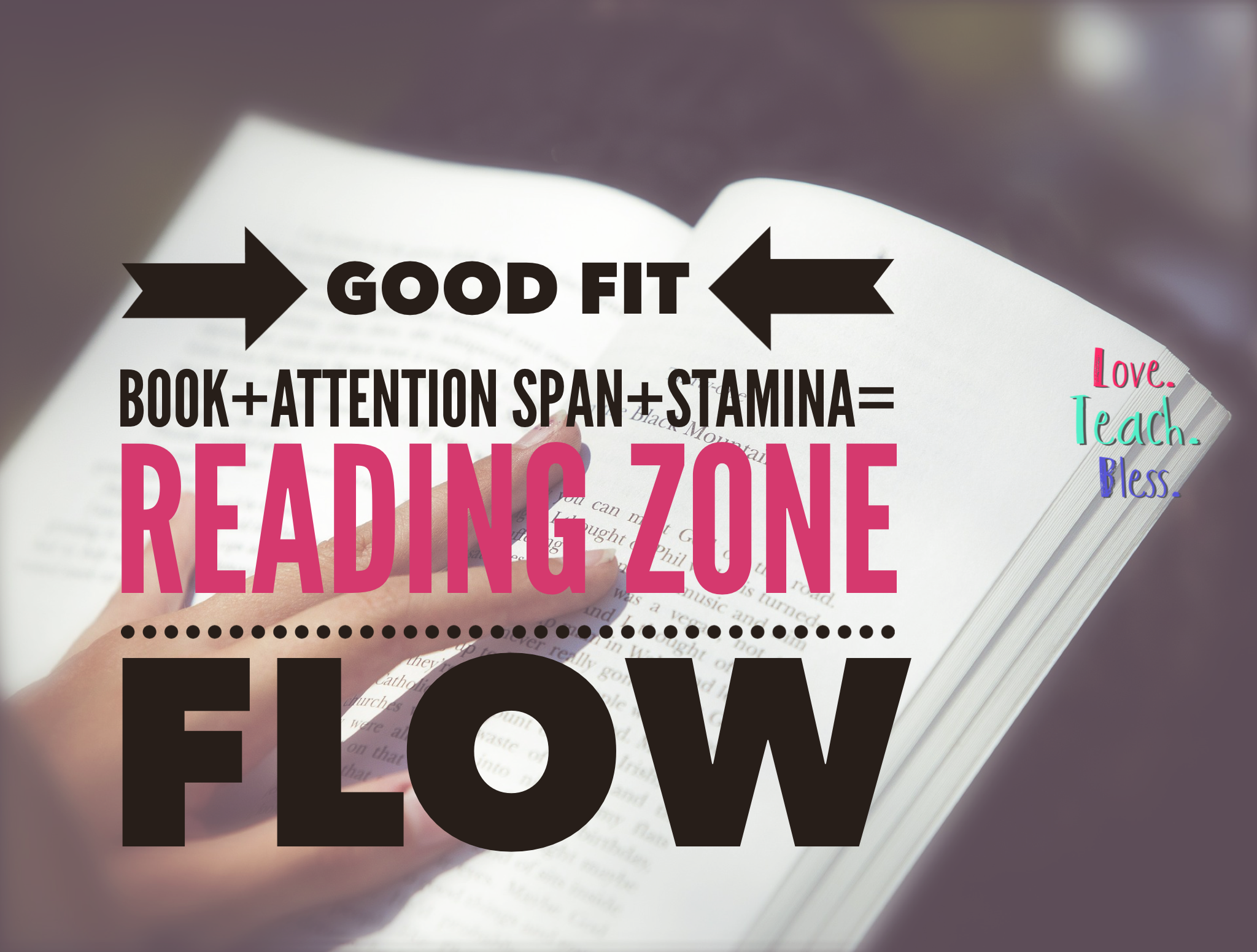

 3 favorite strategies in Goal #2:

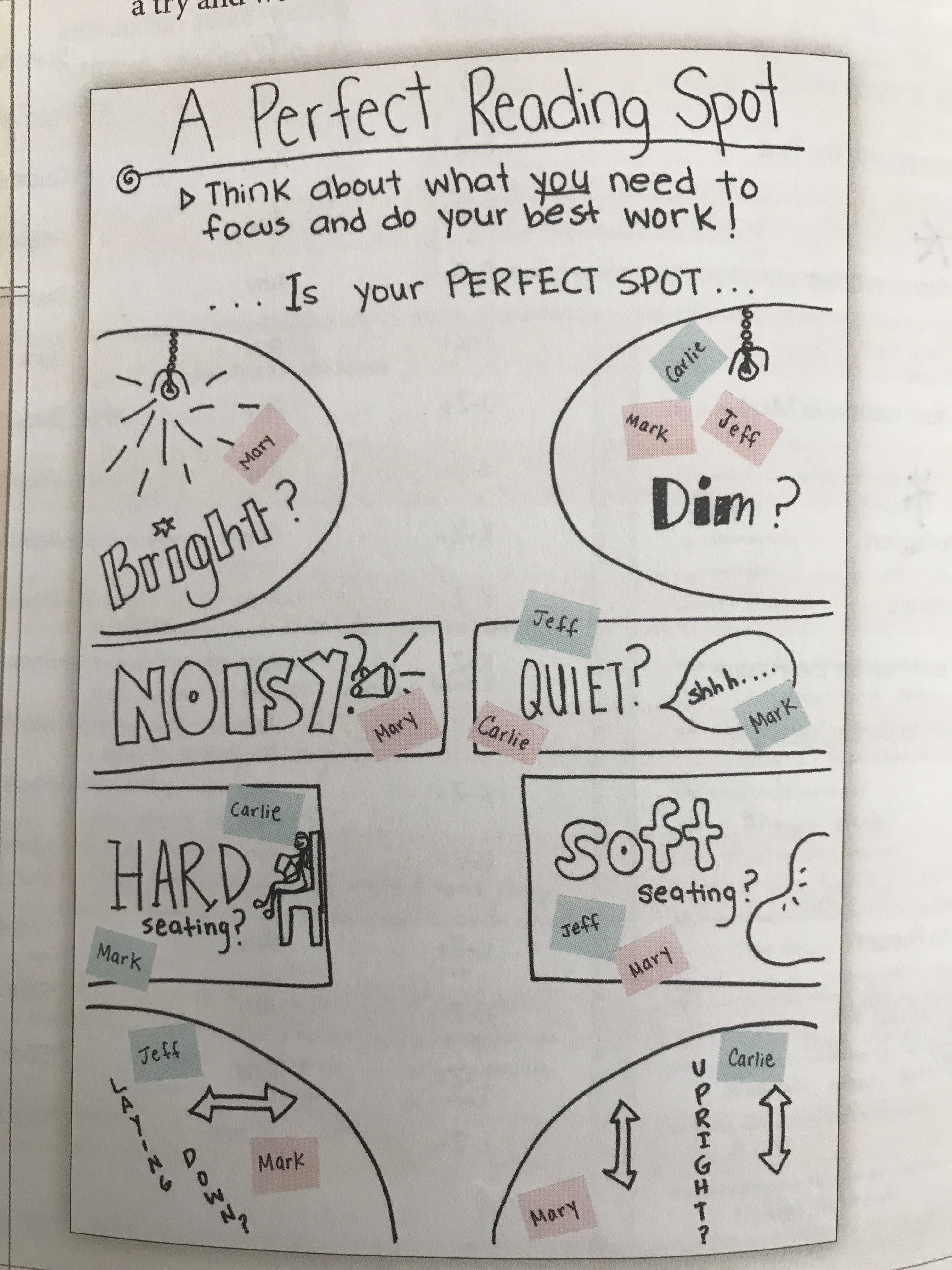
Strategy 2.1 A Perfect Reading Spot

This is one of my favorite strategies in this  section. I feel like it is my favorite strategy because finding a perfect reading spot is essential to maintaining focus during a student’s reading zone time. If a student struggles to pay attention and attend to text, then if that you are in a spot that is distracting to them, they will not be successful at doing their reading zone time. Picking a spot that is perfect for them if essential to them being successful.

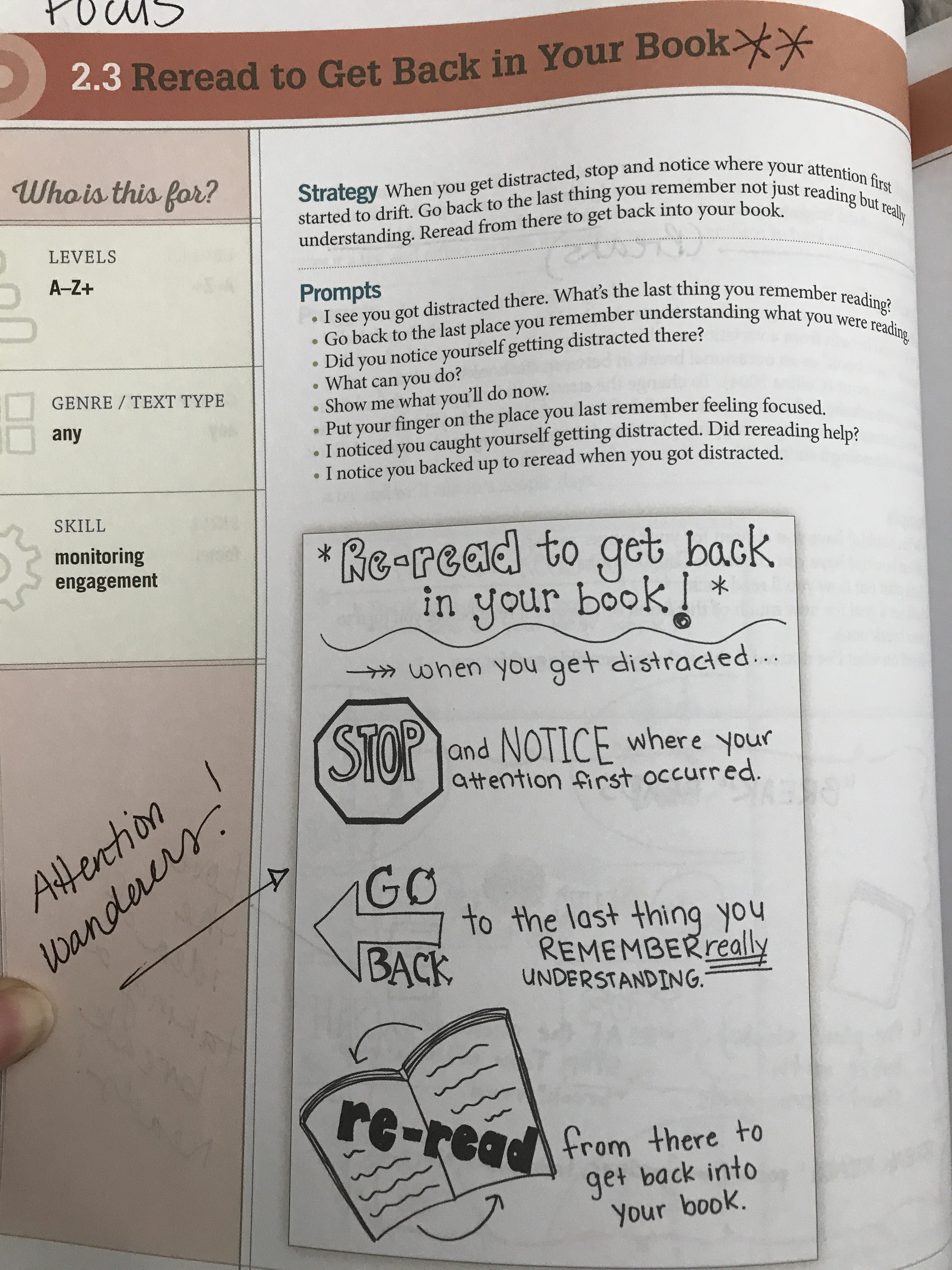
2.3 Reread to Get Back in Your Book

How many times even as an adult do you get distracted while reading? As adults, we know that we have to go back and re-read the sections that we were distracted in order to comprehend the text. But kids possibly won’t do that without being taught. In strategy 2.3, it helps with teaching kids to go back and re-read the part in your book when they get distracted! I remember this happening to me very much as an elementary school student. But instead of going back and rereading the text, I would continue on reading even though I didn’t know what the text was even talking about. I would then not do well if there were comprehension questions that went with the reading passage or book. I believe this is why this strategy was an important one to me. If I had been taught and modeled how to go back and reread to get back in my book, I would’ve been a more successful and focused reader. 
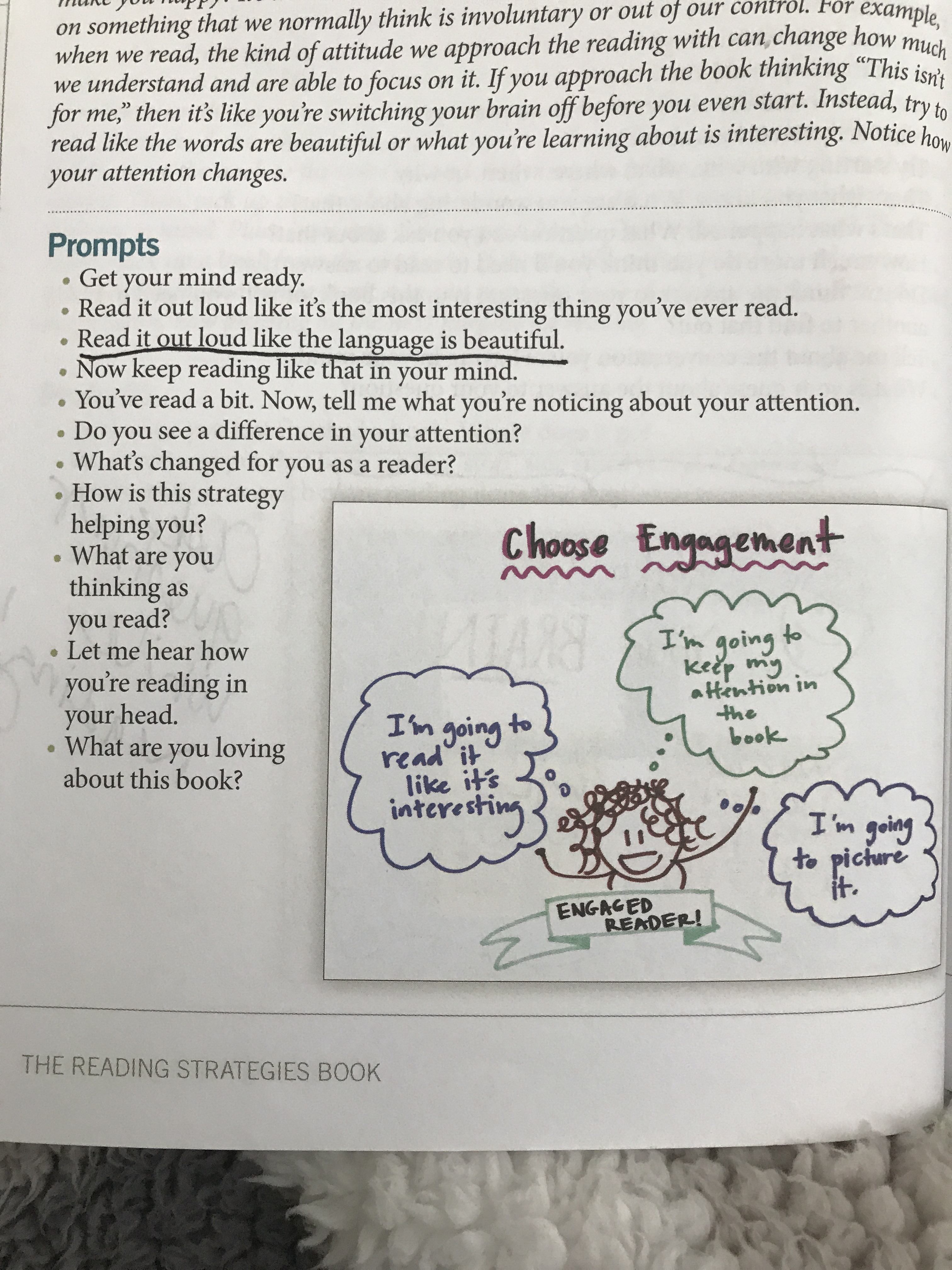
Strategy 2.13 Mind Over Matter

Another strategy that I thought was an important one was strategy 2.13, Mind Over Matter. I don’t only think this is a strategy just for reading time, however, I believe this is a life skill for all subject matters for all grade levels. This strategy discusses being engaged even when you don’t want to be engaged. This made me think back to college and my Environmental Biology coursework. Did I love learning about Environmental Biology? No. The thought of it made my stomach turn.  It was one of those core classes that I had to take in order to finally be able to study what I cameto college for, Education. But I knew I had to get through it! I knew I had to put in my mind that Environmental Biology was something that I wanted to learn about and I made myself feel it was engaging. Were there times that I had to go back and reread because I had lost my attention? Yes. Were there times that I had to retell and go over the facts that I had learned and chunk  out long sections that I thought were boring?  Yes. But it was something that I had to do. I had to get my mind ready for reading. This strategy is an important life skill to teach students. There won’t always be reading that the student’s are interested in. There won’t always be reading that describes the student’s reading identity. And that’s ok 👌🏽. What I found in that Environmental Biology course, was the more that I changed my attitude about my reading and the more that I read, it became more interesting to me. The more I learned. This life skill in reading will help students learn too.

These were my top 3 strategies! On to reading Goal 3 & 4! Happy reading!
Goal 1: Supporting Pre-emergent & Emergent Readers


This is Week 2 of the The Reading Strategies Book study! If you haven’t read my previous post about the intro, go ahead and read it! If you have, great! Go ahead and read about Goal #1 & #2!

Goal 1: Supporting Pre-emergent &  Emergent Readers

I loved reading the introduction of this first goal! There are a few key thoughts that spoke to me before diving into the awesome strategies. This particular quote just kept repeating in my head throughout the entire chapter.

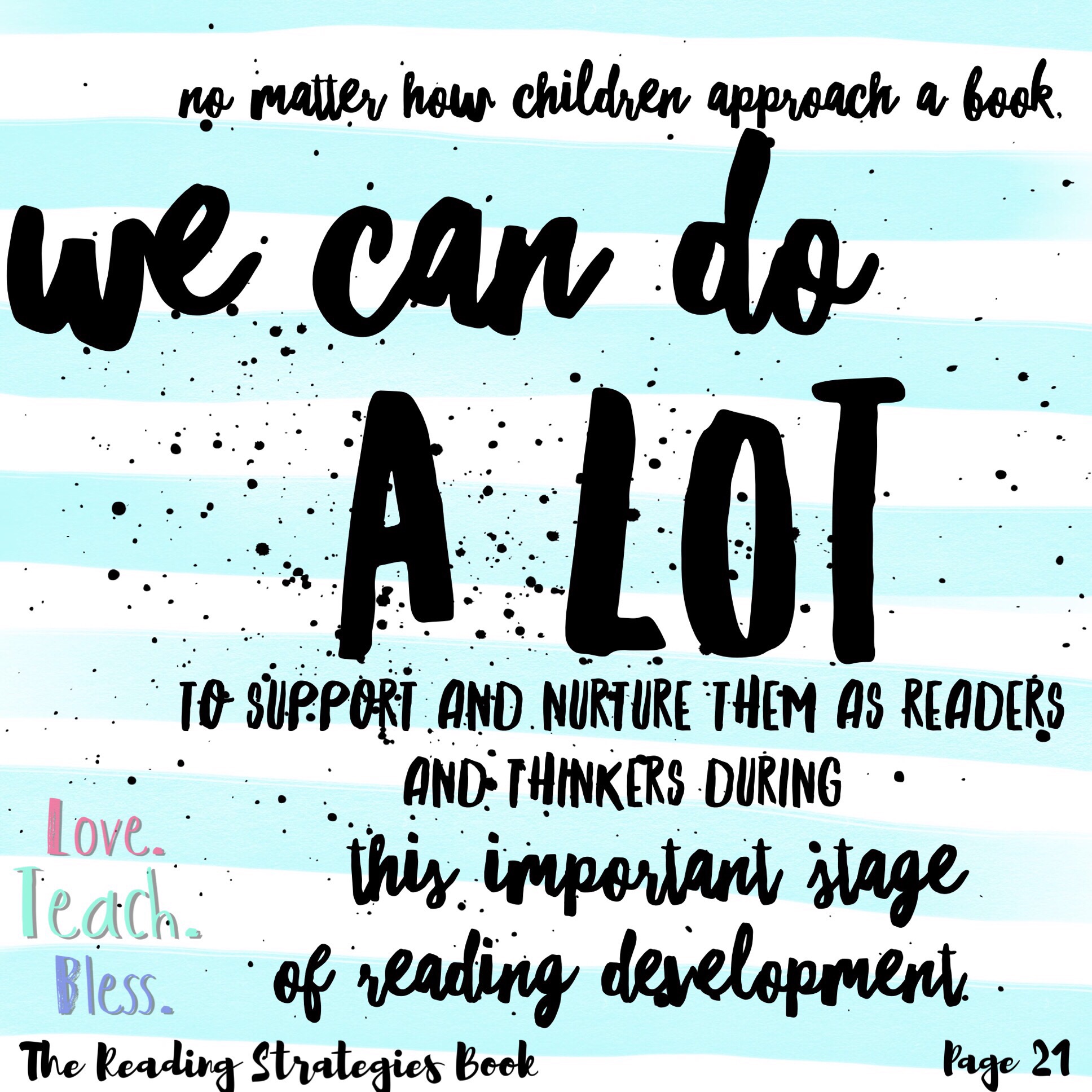
“No matter how children approach a book we can do a lot to support and nurture them as readers and thinkers during this important stage of reading development.” -page 21


Even though the students may not be able to “read” the words just yet, there are strategies that can be taught in order for them to continue to grow as readers and thinkers. It prepares them for the next stage of reading development. I believe this is so incredibly powerful when teaching pre-emergent and emergent readers.

Tip for teaching these strategies:

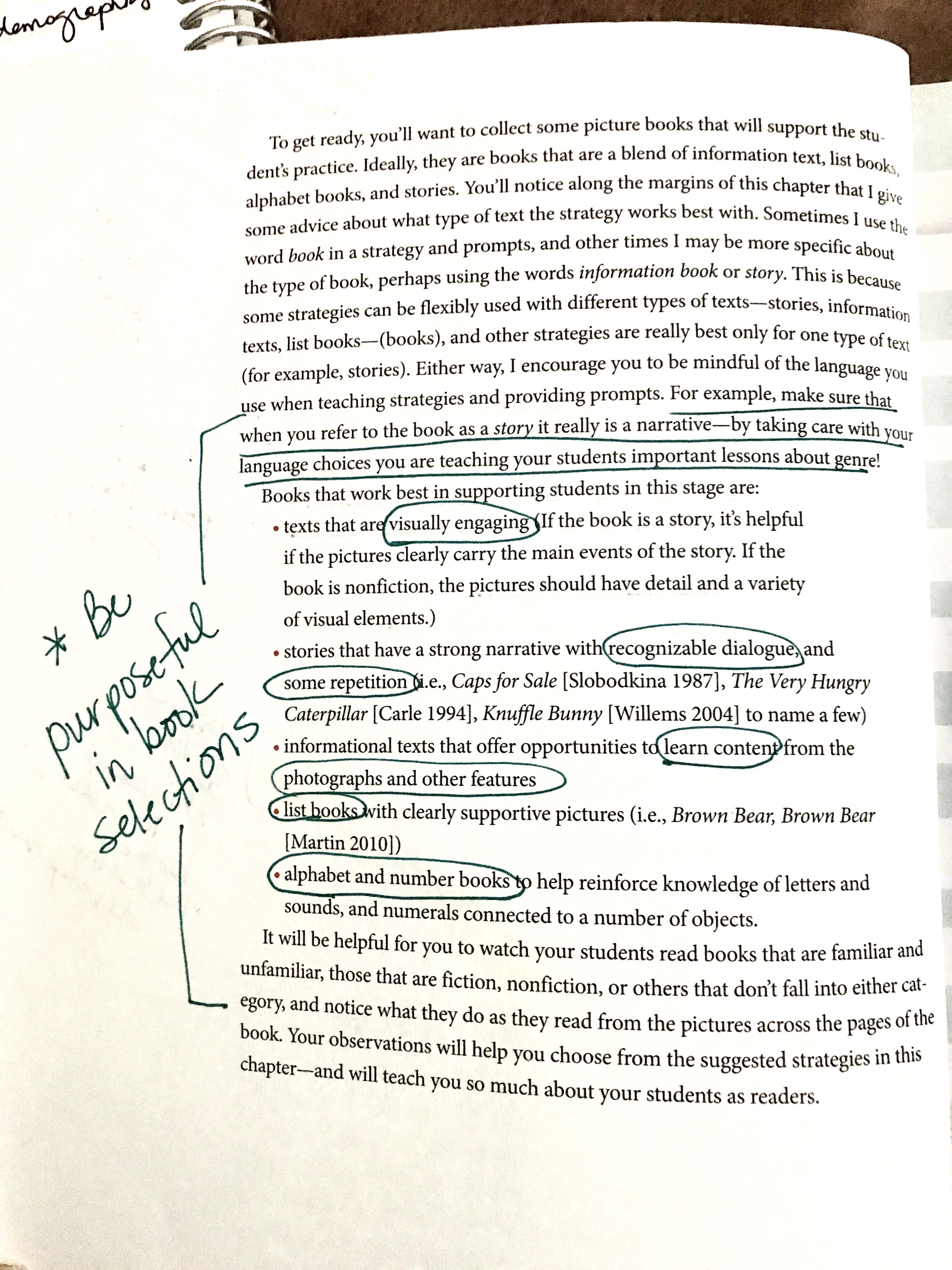
Serravallo also states on page 22, to be mindful of the language you use when teaching strategies and providing prompts. Be purposeful in your book choices (stories vs. nonfiction) when uses these strategies.


3 Favorite Strategies in Goal #1: 

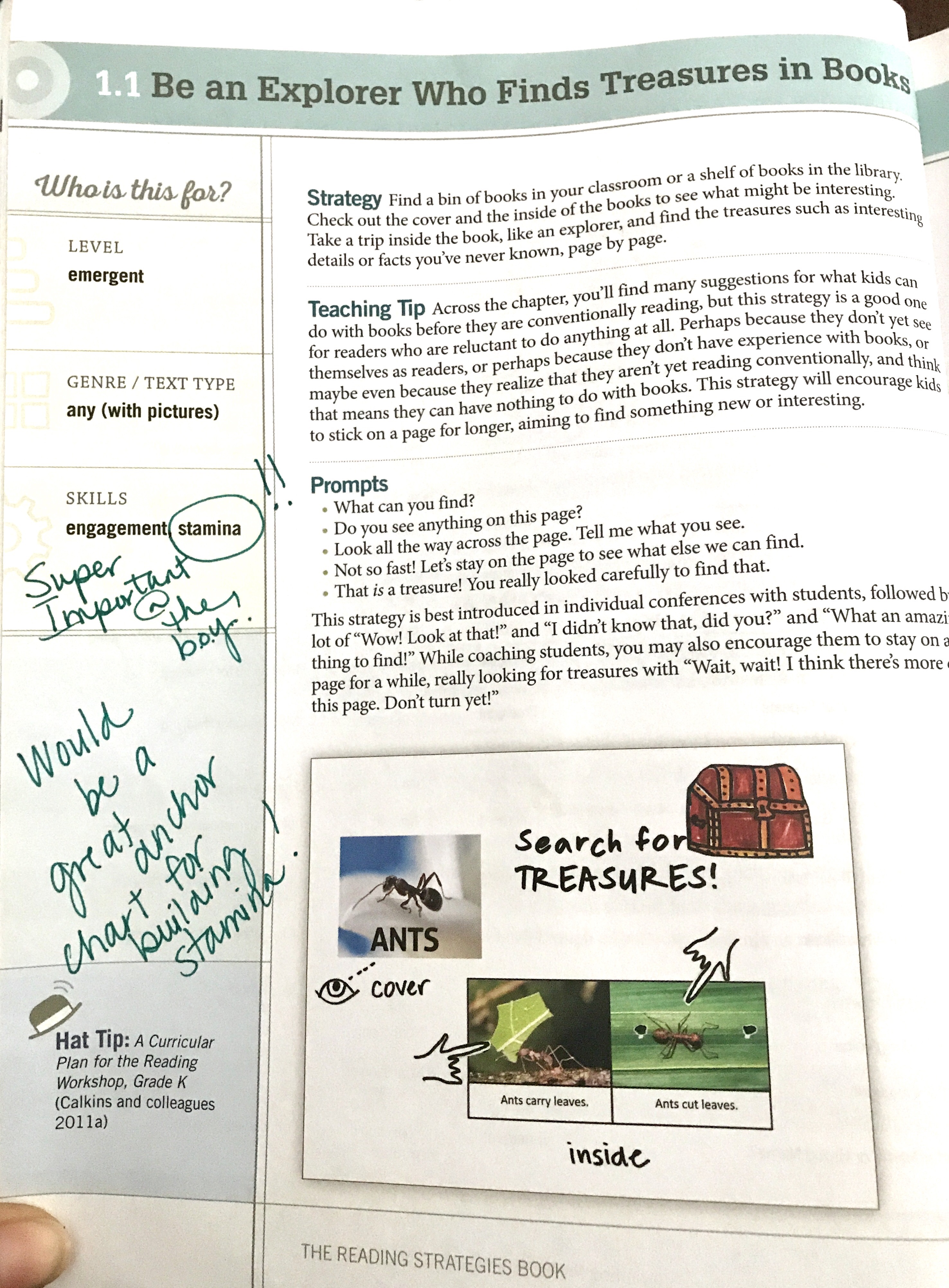
Strategy 1.1- Be an Explorer Who Finds Treasures in Books

This goal is great to building stamina especially at the kinder level and beginning of first grade. It has the kiddos “take a trip inside a book” to find details/𝓓𝒆𝓽𝓪𝓲𝓵𝓼facts they wouldn’t have known. Having the students, “search for treasures” is an awesome way to begin those “pre-reading” skills they will need in the long run. I love this and I could see a teacher using this within the different stations in Daily 5 as well.


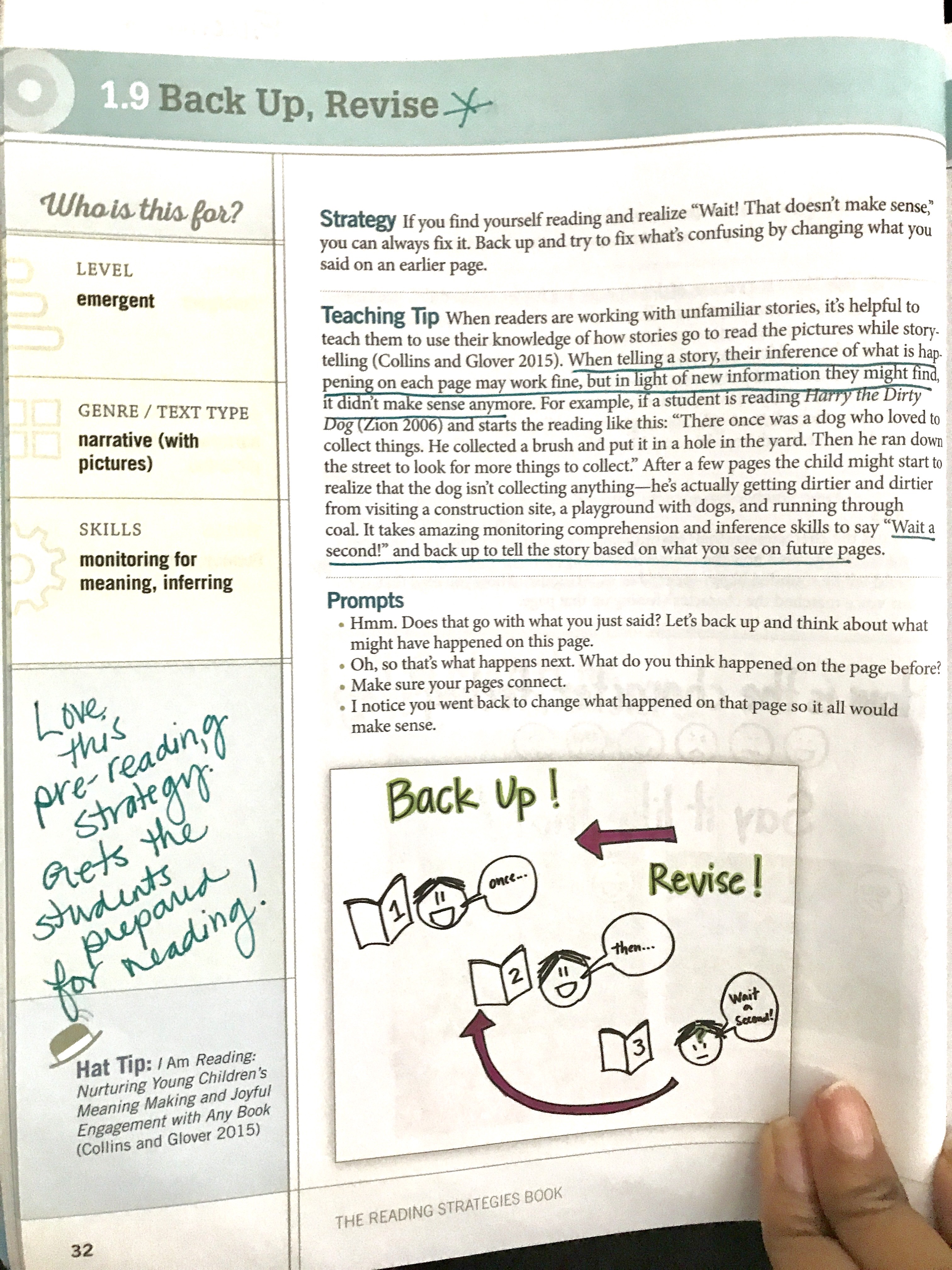
Strategy 1.9- Back Up, Revise

This particular goal is awesome for teaching pre-readers to monitor and infer! The students are telling the story and focusing on each detail they observe in the story on each page.  However, if they find that they tell the story incorrectly, this strategy teaches them to monitor and if they make a mistake to SELF-CORRECT! Yay! How powerful is that?!?


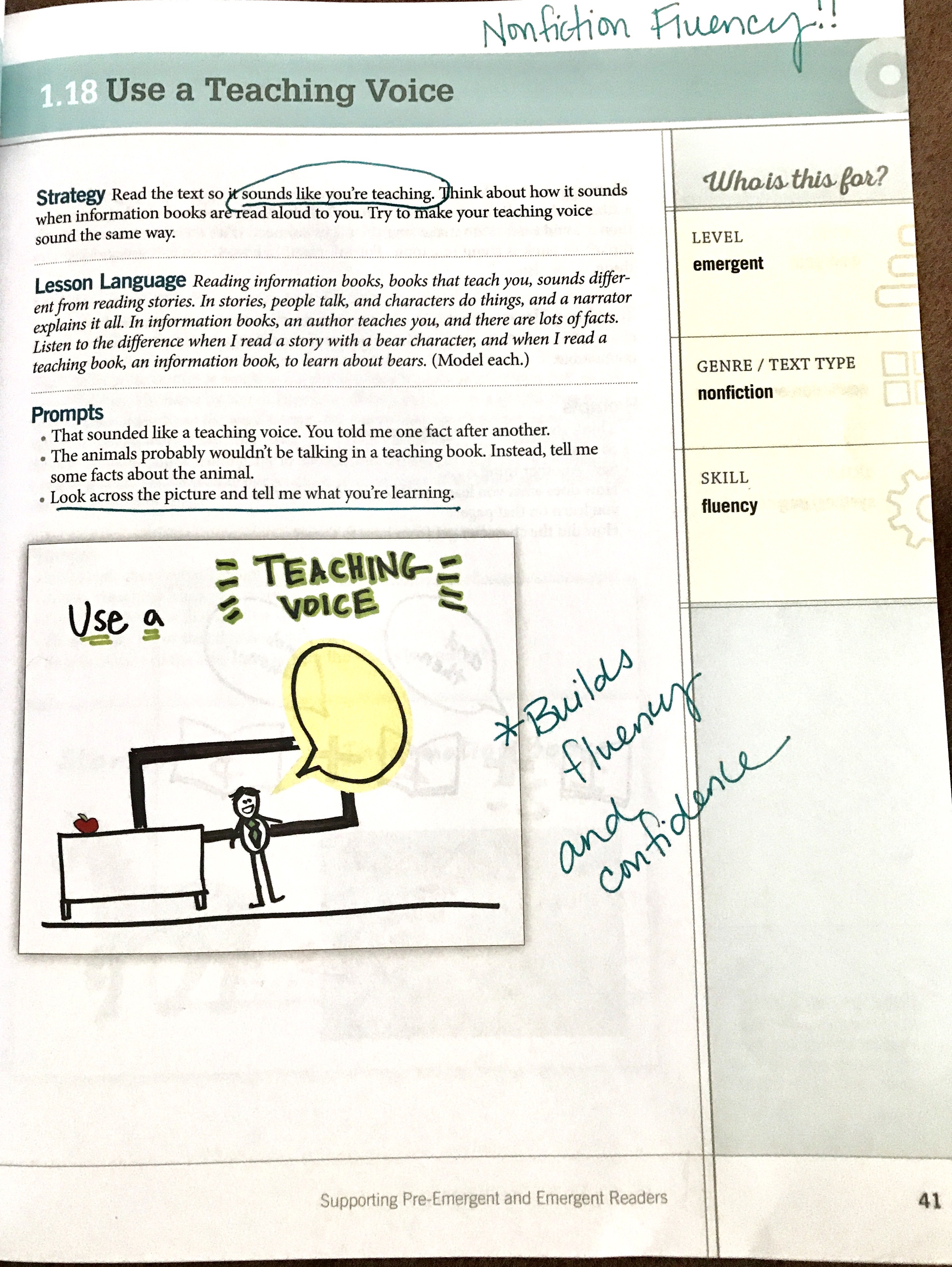
Strategy 1.18- Using a Teaching Voice

I love this strategy because it teaches nonfiction fluency! This strategy teaches kiddos to sound like they are teaching when they are “reading” across the pages. Love, love, love it! It also shows the kiddos the differences in genres. What a great way to model the difference in fluency within genres. ❤️

Bonus:

So although these are my top 3, Goal 1.8 Express the Emotions, was also great goal to build fluency. I found a video of Serravallo demonstrating a version of this strategy! Click on the link below:

Small group clip: Strategy-Character Feelings
These are my faves! I had a difficult time choosing my top 3. Now moving on to Goal #2. I will separate the goals in different posts. Happy reading! 😊

Signed

Serravallo Book Study- Introduction: Getting Started 

 What is my favorite quote from the “Getting Started” section?

I hate to sound redundant, however, my favorite quote was on page 19,

 “We must meet children where they are, we must understand them well to teach them, and we must offer them the right amounts of supports and challenges to grow.” 

This spoke to me in a number of ways. First and foremost, it emphasizes building relationships with your students. When you build those relationships, you understand them better as a person and as a learner. It allows you to know what support they need and also how to challenge them in ways that will aid them in their growth.

How do I fit in time for conferencing and/or goal-setting?

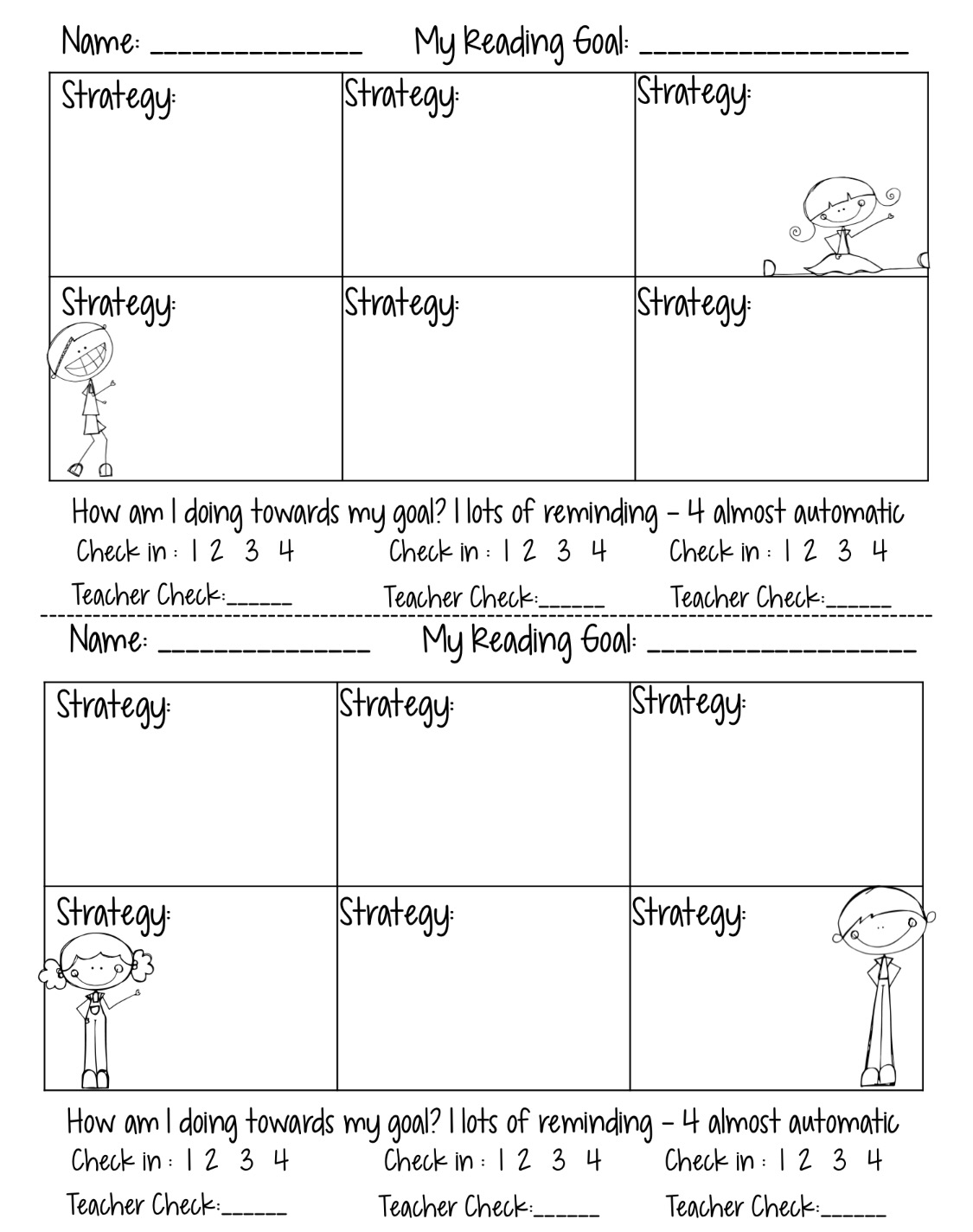
We all know that conferencing and goal-setting can be tricky at times. One way that I conference with students is doing their read- to-self time and also in the last five minutes of small group time. I try to set up a schedule for conferences so that I am meeting with each group once a week in order to discuss reading strategies for the students to work on. This year my school implemented CAFE/CRAFT. CAFE stands for Comprehension, Accuracy, Fluency and Expanding Vocabulary. Craft is an extension of Cafe. CRAFT stands for Comprehension, Responding to text, Accuracy, Fluency and Text Features. These two programs are effective ways to set goals for students. I began by writing on a sticky note the student’s reading goal for the week and they would keep it in their daily stations folder. The student would rewrite their goal on his/ her own sticky note and place it under the correct strand on the board. I love that Serrvallo also includes a strategies sheet for the students to place in their journals to remind them how to reach their goal.  (pg. 8)

Lookie here at this free download I found on TPT to place in reading journals! Just click on the link below to download via  TPT! 😊

Student Goal Handout! 


Some of my favorite quotes from this section: 

  • “In order to manage the various goals in your classroom, you may consider creating a visual reminder for each individual reader so they can remind themselves what they are working on.” (pg.8)
  • “To me, strategies are deliberate, effortful, intentional and purposeful actions a reader takes to accomplish a specific task or skill. ” (pg. 8)

This introductory section of the book was very informative. It allowed me to see how the book is set up and how to navigate through the different “recipes” throughout the book. I enjoyed reading this section and the background knowledge that it gave me in order to continue to read on to Goals 1 & 2. Happy Reading!

Signed