LEGO® Education launches Amazing Professional Development for Educators

A couple of months ago, I posted on the blog about LEGO® Education BricQ Motion Essential, which is an amazing STEAM Education kit that I absolutely love for myself and children. Well, guess what? There is now a new tool from LEGO Education for professional development that allows teachers to learn how to implement STEAM education in their classrooms! 

Sometimes when it comes to implementing STEAM education into our learning spaces, we don’t know where to begin. But now, LEGO® Education Professional Development offers teachers a unique anytime, anywhere program designed to serve educators’ professional development needs. LEGO® Education Professional Development is a personalized, competency-based learning program that inspires and actively engages teachers in facilitating playful and hands-on STEAM learning. This program has been over a year in the making, so while it wasn’t developed in response to COVID, a lot of the teaching videos were filmed during it, which means it has many features to help support educators continuing to teach from home, while of course providing PD for educators who are back in the classroom. At a time when we’re all looking for ideas on how to teach in these new ways, this PD program is relevant no matter what situation you find yourself in.
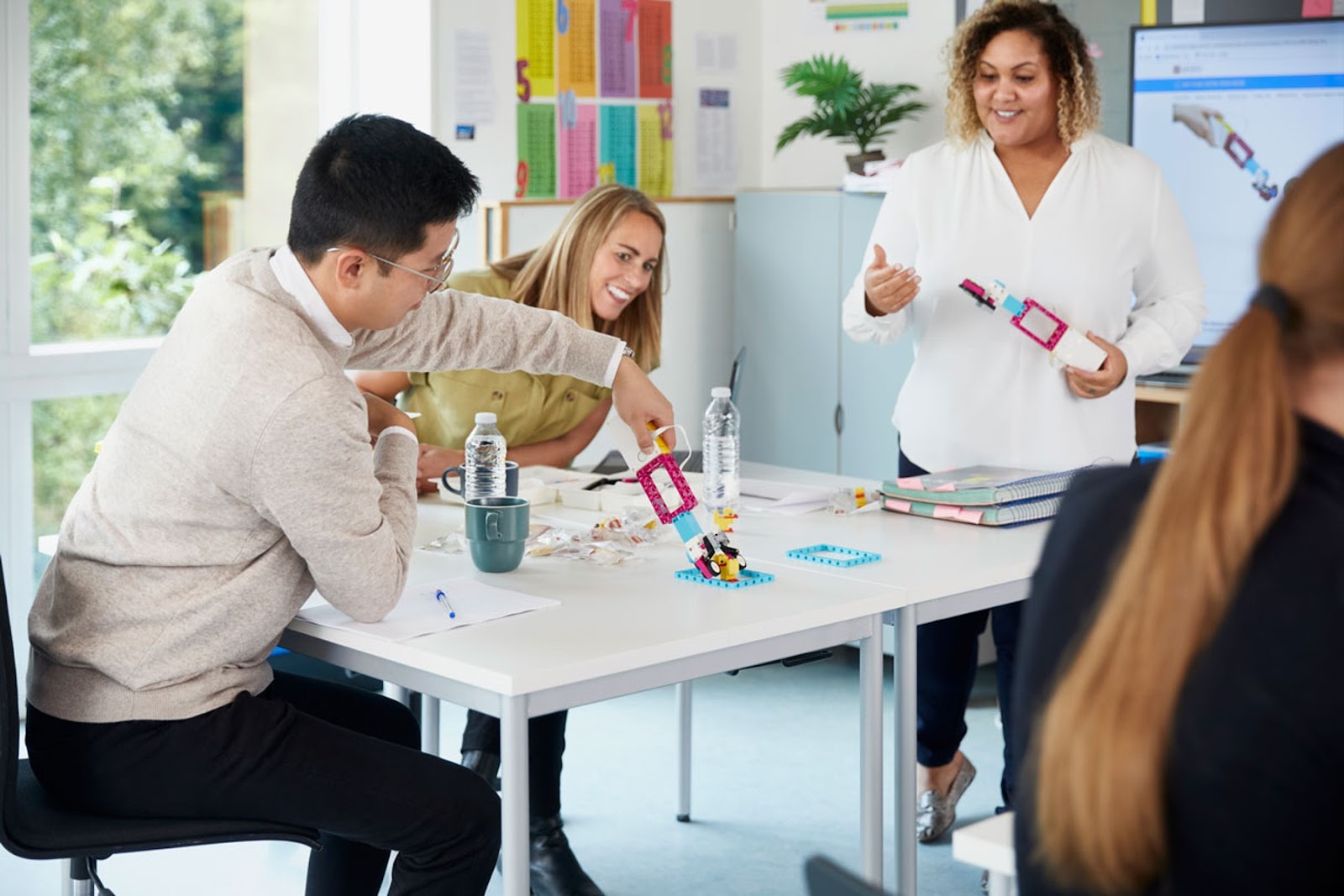
LE_Professional-Development_Lifestyle_1HY21_04.jpg

This professional learning is driven and informed by qualitative research via a collaboration with the Tufts Center for Engineering Education and Outreach (CEEO). (I love some solid research, y’all!) It includes  flexible self-guided learning so professional learning can happen when it’s most convenient for educators.. It also offers real-world classroom videos inspiring teachers to learn from peers and apply new methods in their own teaching. The professional learning gives bite-sized content to fit into educators’ busy days. We know that we are all so busy — especially these days. Whew! So the bite-sized options are perfect for educators during this time.  

LEGO Education Professional Development also enables teachers to choose courses that fit their interests and analyze student learning. As an educator, it’s helpful to know that LEGO Education Professional Development is built on the LEGO® Education Competency-Based Framework, which includes four core categories: Pedagogy, STEAM Concepts, 21st Century Skills, and Classroom Management. 

I watched the learning burst on “Differentiating Learning Experiences,” which has insights on how to use the LEGO Education SPIKE Prime solution with students that have different learning needs. We know our classrooms are not homogeneous so I loved how this learning burst provided tips and tricks on how to use the SPIKE Prime solution to educate different students in a classroom.  

Since I have the BricQ Motion Essential set, I watched the guided video with Teacher Maureen on how to incorporate BricQ Motion Essential lessons into your classroom. The video series is easy to follow and I love how it gives step-by-step guidance on how to use the “Free Throw” lesson. It’s something that an educator can watch and instantly go implement in their own classroom. Maureen begins with stating the objectives, the target age group for the lesson, and shares exactly where to locate the Learning Resource Room to find the online lesson plan, lesson extensions and lesson tips. What makes me so excited as an Instructional Coach is that it correlates directly to Force and Motion standards, Probability in Math, Measurement and graphing and it includes so many other standards of learning! It clearly shows how STEM lessons can incorporate so many standards during student hands-on learning. Since LEGO Education solutions use LEGO bricks and are hands-on, the video format for the PD was great because I was able to easily see what steps to take in order to  seamlessly incorporate into classrooms.

Another amazing part is that all online lessons are free! There are two kinds of self-guided flexible learning modules: Learning Bursts for quick and focused skills practice and Learning Quests for deeper competency development. Teachers can pick and choose courses based on the topic or length and aren’t required to follow a predetermined order. This is exactly what teachers need right now in the midst of everything that is going on.Teachers can observe playful STEAM learning through videos of real classrooms and teacher interviews that help demonstrate the competencies in a variety of learning environments, including in-person, physically distanced, and virtual classrooms. It meets educators’ needs right now–right where we are.

LEGO Education Professional Development will launch in eight languages and feature LEGO® Education SPIKE™ Prime and LEGO® Education BricQ Motion product training with additional LEGO Education solutions added throughout the year. 

To learn more about the new LEGO Education Professional Development program, visit: http://www.LEGOeducation.com/pd. You won’t be disappointed. Let’s get our learning on! 

Using Mentor Texts to Teach Reading Skills: Ten Ways to Hear Snow

Finding new children’s books that speak to my soul is my passion. Finding new children’s books that speak to my soul, allow me to learn new things and connect to life is my passion on overload. That is what this book, Ten Ways to Hear Snow written by Cathy Camper and illustrated by Kenard Pak, has done for me. As an Instructional Coach, I look at books from the lens of ways it could be used in a classroom community or enjoyed in a home setting as well.

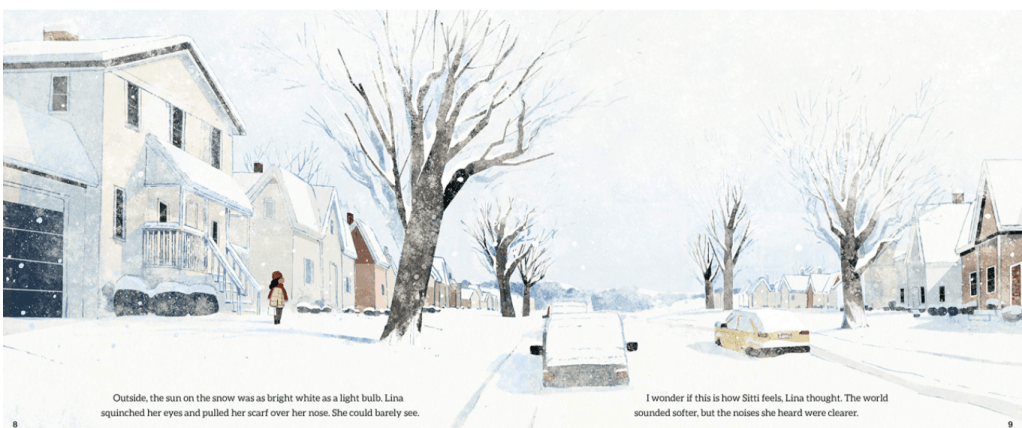
This particular book is about a little girl named Lina that wakes up to silence. It’s the sound of snow — the kind that looks soft and glows bright in the winter sun. But as she walks to her grandmother’s house to help make the family recipe for Warak Enab, she continues to listen.
As Lina walks past snowmen and across icy sidewalks, she discovers ten ways to pay attention to what might have otherwise gone unnoticed. With stunning illustrations by Kenard Pak and thoughtful representation of a modern Arab-American family from Cathy Camper, Ten Ways to Hear Snow is a layered exploration of mindfulness, empathy, and what we realize when the world gets quiet. (Penguin Random House)

Learning Targets: Notice & discuss sensory words or phrases in a poem or story & Think about how sensory language helps me visualize.

Before Reading:

Using this book is perfect for creating mental images with the sensory language that is infused in the book, Ten Ways to Hear Snow. Before reading it will be important to increase student’s background knowledge of Lebanon and its location in the world. Show students the front of the book to help them to predict what might happen in the story to notice the cover and illustration. This will help students to get an idea of what the book is about.

Set a Purpose for Reading:

Your purpose for reading–Some authors use sensory language to help us better experience a story and/or to teach a lesson.

Sensory language is when authors use words that help us picture things and paint a picture in our minds. Chat about the five senses and as you read the story, have the students see where they notice sensory language.

During Reading:

As you read the story to the students ask the following questions to get their minds thinking of the sounds in the story.

Page 8

What was the first way to hear snow? 

scraaape, scrip

What was that sound? 

Mrs. Watson’s shovel digging out the sidewalk.

Page 9

What about the second way to hear snow? 

snyak, snyek, snyuk

What was that sound? 

The treads of Lina’s boots crunching the snow into tiny waffles.

Page 10

What was the third way to hear snow? 

ploompf

What was that sound? 

The Blue Jay on the Branch

Page 27

How does Sitti know that there was a blizzard? 

Page 30

What was the last way to hear snow? 

Quiet

After Reading:

Talk to students about why Sitti had to hear snow and how hearing could be a heightened sense. Have a discussion with students on how Sitti could tell that it was a blizzard.

Talk to students about the relationship between Lina and Sitti. What ways did you know as the reader that they had a close relationship and were friends.

Extend the Learning:

In the learning extension, have students draw and name two out of the ten ways that Lina heard snow in the story. Then at the bottom, students can name their favorite way to hear snow. They can also write about what snow sounds like to them and draw a picture.

Students will absolutely love this story. It is a wonderful book to engage with during the winter holidays. A fun way to culminate this activity would be to make snow with you students in the class! How fun is that! You will also be able to get a resource for 1/2 off on Teacher Pay Teachers. It is an extended version of this freebie above! Here you go! Ten Ways to Hear Snow Interactive Read Aloud is 50% off search in TPT with code readingcrewdeals2021!

Click on the link below to see more blog posts with Winter Mentor Texts, Lessons & Freebies!

You are invited to the Inlinkz link party!

Click here to enter
https://fresh.inlinkz.com/js/widget/load.js?id=a3325ea8d75a7b860d96

You are invited to the Inlinkz link party!

Click here to enter
https://fresh.inlinkz.com/js/widget/load.js?id=a3325ea8d75a7b860d96

Enter to win the giveaways!

a Rafflecopter giveaway

It’s World Read Aloud Day!

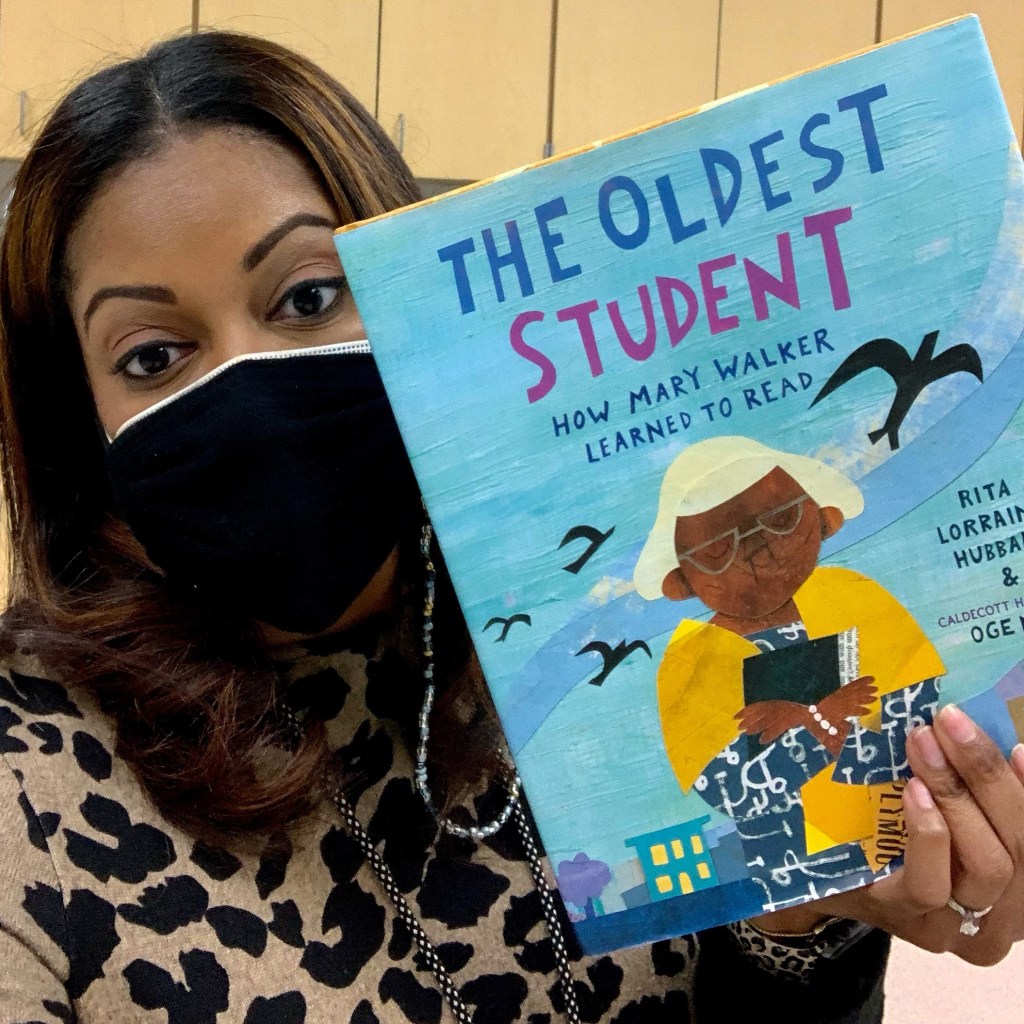
The Oldest Student: How Mary Walker Learned to Read written by: Oge Mora

Today is World Read Aloud Day! I’m always ready for a great read aloud! Are you? Remember that read alouds can and should be happening K-12. I remember my 10th grade teacher (circa 1994) getting out, The Giving Tree by Shel Silverstein. I don’t remember the lesson, but I do remember being in class and not so much of a pencil dropped. That is what read alouds do!

When Reading Aloud Remember This:

📖 Read the book before hand! It helps to get your fluency ready to read to kids. It allows you to pull out important vocabulary, themes, background knowledge, etc.

📖 Think of questions to engage your readers to create an interactive read aloud. Is there are word or phrase that repeats? Get them to engage with you! Are there critical questions to create discussion? Ask them.
Hint: I write mine on sticky notes and stuck them in my book to remind myself to ask. I leave them in the book for next time.

📖 Your voice, inflection and intonation are EVERYTHING. I remember when I first started teaching, I read to my students like a robot. My poor 2nd graders were so sweet and sat through those awful read alouds without a wiggle. Maybe they did wiggle— I can’t remember. That was in 2002. 😂 I’m so grateful for my room parent that did a read aloud intervention. She was a former teacher and her read alouds were magical! 🤩 I vowed to make my read alouds just as magical—and I did! Don’t underestimate the power of a whisper and a pause.

📖 Have fun and bring your kiddos along for the ride. Let them be part of your read aloud journey! Make it an experience! 🤩

🌎Read the World on World Read Aloud Day! 🌎

Note-This book in this picture above is written by Oge Mora. 4th graders looooove this book. It’s a true story and it creates wonderful discussion, ties in history and critical thought provoking questions!