Honoring Memory and Voice: The Roots of Memorial Day and the Power of Reading Aloud

As Memorial Day approaches, many of us fire up the grill, plan family gatherings, or enjoy a long weekend of rest and relaxation. But beyond the food and the hopefully sunshine, there’s a deeper story—one that begins with Black Americans and a powerful act of remembrance that deserves to be told again and again.

In May 1865, just weeks after the Civil War ended, newly freed African Americans in Charleston, South Carolina, organized what many now believe to be the first Memorial Day ceremony. They gathered to honor Union soldiers who had died fighting for their freedom. These men, women, and children held a parade of over 10,000 people. They sang hymns, brought flowers, and built an archway that read “Martyrs of the Race Course.” It wasn’t just a moment of mourning—it was a declaration that Black lives, Black grief, and Black gratitude mattered.

It’s a story I return to often, especially when I’m reading to children. Because remembrance isn’t just for the past—it’s a tool for building the future. And books are one of the most powerful ways we do that.

Reading aloud to children isn’t just a sweet bedtime ritual; it’s an act of love, of connection, and of empowerment. It gives children the words to express themselves, the empathy to understand others, and the confidence to see their place in history. I want to share a few books that share the history of Memorial Day.
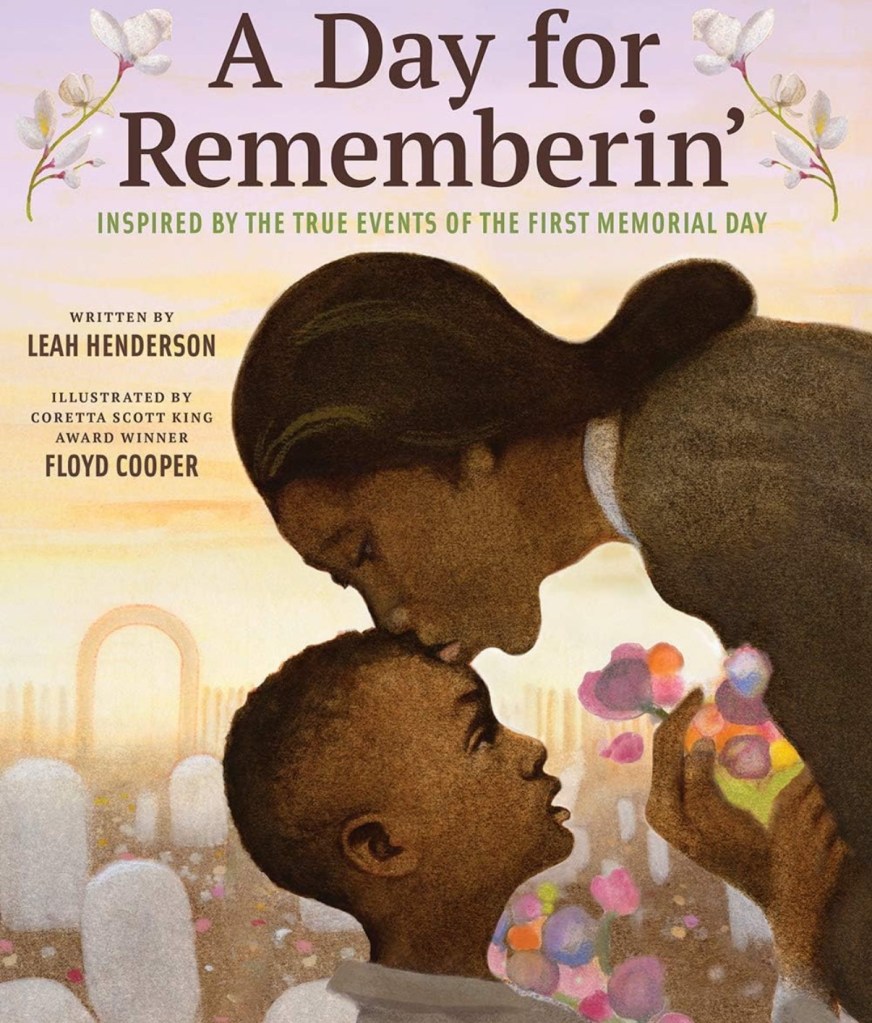
A Day for Rememberin’, by Leah Henderson, bring to life the origins of Memorial Day through the eyes of a young boy witnessing that first Charleston ceremony. It’s a beautiful reminder that history isn’t just something we read about—it’s something we carry, pass on, and continue to shape.
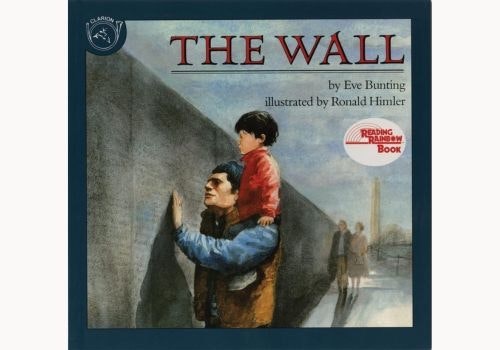
The Wall, by Eve Bunting, takes us to the Vietnam Veterans Memorial, where a boy and his father search for a name etched in stone. It’s a quiet, powerful story that reminds us how memory can live in both silence and storytelling. Reading this book aloud opens space for children to ask questions, share their feelings, and begin to understand the complexity of loss and honor.

And then there’s Maya Lin: Artist-Architect of Light and Lines, which tells the story of the visionary behind the Vietnam Veterans Memorial. Her work teaches us that honoring memory can take many forms—through art, through architecture, and yes, through words on a page.

When we read aloud to children—whether it’s about the heroes of the past or the artists who help us remember them—we’re doing more than telling a story. We’re helping our children build a world where every voice matters and every history is honored.

This Memorial Day, as we remember those who gave their lives, let’s also remember the power of story. Let’s read together, speak their names, and teach our children to carry the torch of memory forward—with pride, with compassion, and with purpose.
It’s My Birthday!

It’s my Book Birthday! 🥳

🫧 🎂💕Happy Birthday, ROYB!! 💕🎂🫧

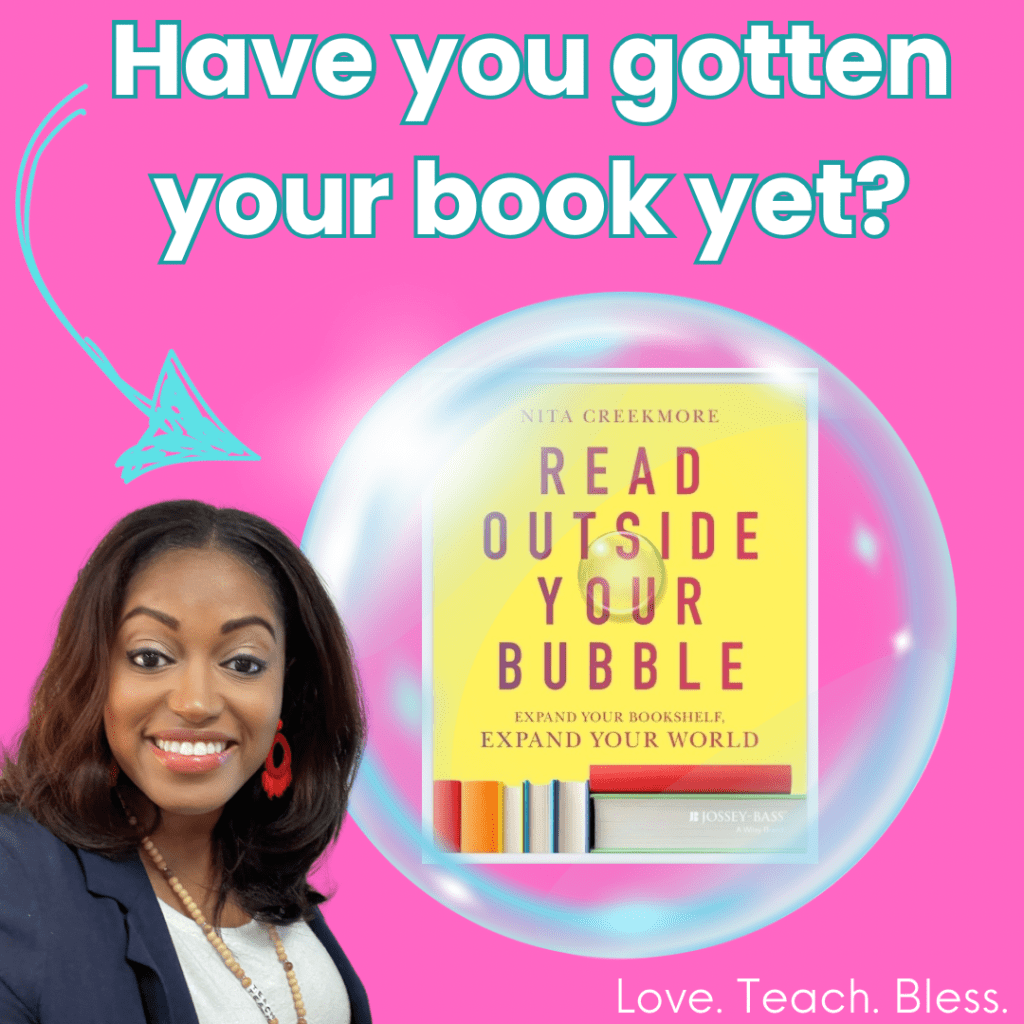
Today, March 11th, is the official publication date for Read Outside Your Bubble: Expand Your Bookshelf, Expand Your World! 🌎 Today is its official Book Birthday! 🎂💞 I couldn’t be more excited!

This book comes at a very critical time in our society. It’s a time where it’s critical to share stories of others outside our bubbles. It’s a time where we need to share our own stories. Especially, if you are a part of the marginalized community or the global majority. We must share our stories, our past, our histories so that we are uplifted and it is not erased.

Read Outside Your Bubble is a book for educators, learners, parents, caregivers, new, and veteran teachers that discusses the importance of sharing stories, histories and reading outside our bubbles. It shares the critical nature of expanding our bubbles to make our world better. 🌍

This month is Read Across America month! But truly we should be reading across America all year long. If you haven’t ordered Read Outside Your Bubble, click on the link! If you have, thank you and I would love for you to share it, tag me and leave a review!


Purchase, Read, Rate and Review!
⭐️ ⭐️⭐️⭐️⭐️

Writing Doesn’t Have to be Grueling! : Getting Started with Opinion Writing

Click on the video and click the square in the right hand corner to watch full screen
A peek into writing

Organizing Thoughts While Close Reading

For this particular writing, we began as a class close reading a text about whether or not the penny should be still a coin we use in the United States. Because our focus is opinion, our purpose for reading the text from the standpoint of whether we are for the production of the penny or against the penny’s continuation. A great way to organize thoughts while close reading the text for this purpose is a t-chart that says for on one side and against on the other. I teach my 5th graders to organize this information in their journals. I do not make them create a graphic organizer this way—it is an option. However, they must show me how they organized the information they read in their journals with the purpose of differing opinions. Most of my students chose the t-chart as their organizer, however, some created their own organizers which worked for them.

Class Discussion

Once they completed the reading, each student had to decide whether or not they were personally for or against the production of the penny. As a class we had a discussion of their stance and their why or why not behind their stance. This discussion was so engaging. Listening to their opinions and the reasons behind them based on the text was very compelling. Discussion is an important piece prior to writing. This allows students to voice their opinions, reasons, examples and ideas. I talk about discussion and discourse in my book, Read Outside Your Bubble: Expand Your Bookshelf, Expand Your World. On pages 52-53 of my book, I discuss examples of community agreements you can create in having healthy discourse in your classroom. At the beginning of the year we created community agreements for discussions and we come back to those agreements often.

Students Planning Their Writing

Once students have had their discussions and close read the text, they are able to plan their writing. I have a persuasive/opinion writing plan for them that I use and eventually I wean them off of a plan already set up for them–they eventually draw this plan on their own in their journal. The plan includes an idea for a hook, stating their opinion, three reasons, evidence from the text, elaboration and examples. It ends with a reminder to restate their opinion in a different way. This plan (which is in the video above) is so helpful for students to use to gather their thoughts and begin to writing. Students have said how much this plan is helps them as they begin writing/typing their opinion writings. As students are completing their plans, I make sure that I am a facilitator in that. I model a plan for them which helps them take in my thought process and the ways I look for evidence and brainstorm examples. By modeling for students, it gives them an idea of the level of expectation and teaches them how to plan effectively. When students are creating, I make sure I monitor and meet with students as they are planning. I also have them glue their plans in their ELA journals, because if they lose their plan they are heartbroken because it makes writing easier for them.

Drafting Their Writing

Students use their plan to begin drafting their writing. I also model this. Again, modeling helps students see the pathway forward in their writing. This helps them move from the plan to their writing drafts. Students can write their opinion writings in their journals or they can type it. Most of the time, I have my 5th graders type their writings. Most of them like to type rather than write out their essays, however, sometimes we do write in our journals things like summaries, notes, our thoughts, etc… Students begin using their plan to draft their writing. While they are doing this, I am walking around conferencing with students. Conferencing with students is so essential and doable. I will chat more about conferences next week! In the meantime, follow these steps in getting started with opinion writing with your students. I cannot wait to dig more into how I move into that process!

Chat next week!